.png?width=150&height=81&name=Houghton%20Contracting%20Logotype%20New%20Logo%20(1).png)
9 Min Read
Remodeling your kitchen is exciting, you're getting the dream cooking space you always wanted. But living through a kitchen remodel can also be incredibly stressful. If you're a homeowner in central New Jersey (from Hamilton to Princeton to West Windsor), you know that having your kitchen out of commission disrupts your daily routine.
How will you cook, eat, or keep the house clean amid all that dust and noise? Take a deep breath. It is possible to live through the chaos of a kitchen renovation and come out sane on the other side. The key is thoughtful planning, flexibility, and a good sense of humor.
In this guide, we'll cover 10 smart kitchen remodel survival tips, from setting up a temporary kitchen to keeping your family safe, so you can maintain your sanity and maybe even find some upsides while your new kitchen takes shape. Let's get started!
Table of Contents
- What to Expect During a Kitchen Remodel
- How to Mentally & Logistically Prepare
- Setting Up a Temporary Kitchen
- How to Wash Dishes Without a Sink
- Keeping Your Home Clean & Safe
- Stay Flexible (and Sane)
- Communication is Key, Working With Contractors
- FAQs
- Conclusion
What to Expect During a Kitchen Remodel
First, prepare for dust, noise, and general disruption, it's inevitable. Expect dust during remodeling; fine debris will likely travel beyond the kitchen, so parts of your home may feel like a construction site.
Noisy power tools and hammering starting early are common (in many New Jersey towns, work is allowed from around 7 a.m. to 6 p.m. on weekdays, with quiet hours at night and on Sundays). Your remodeling team will probably seal off the kitchen with plastic sheeting and tape to contain dust, meaning that area will be off-limits until the work is completed and thoroughly cleaned. Plan on not having access to your usual stove, sink, and counters for the duration of the project.
Exactly how long that disruption lasts depends on the scope of work, so understanding how long a kitchen remodel takes in Central New Jersey can help you plan your temporary kitchen and daily routine more realistically.
Life during a remodel will be chaotic at times. Your refrigerator might be in the dining room, and you'll find yourself cooking on a hot plate in the basement. It helps to know this is temporary and to remind yourself why it's worth it (a beautiful new kitchen!). Despite the inconvenience, try to embrace the process. You may even get to know the workers by name and learn a thing or two about construction. In the following tips, we'll cover concrete ways to prepare and cope so you can live through your kitchen remodel as smoothly as possible.
How to Mentally & Logistically Prepare
Preparation is everything when facing a kitchen remodel. Start by packing up your kitchen well before construction begins. Treat it like you're moving: empty cabinets, box up dishes and gadgets you won't need, and clearly label everything. Set aside the essentials you'll use in your temporary kitchen (we'll cover that next).
- Clearing the area not only protects your belongings from dust, but it also gives the contractors a blank slate to work in. Remove wall decor, cover furniture near the kitchen with plastic, and tape plastic sheeting over doorways and vents to help contain dust. In many remodels, all your furniture and belongings must be moved out of the kitchen; anything that can't be moved (like a large cabinet) should be tightly wrapped in plastic for protection. Don't forget to take down curtains or fabric items that could trap dust, and cover or seal off any open doorways. This upfront effort will make cleanup much easier later.
- Next, plan your alternative living arrangements while the kitchen is out of commission. Figure out where you'll cook, store food, and wash dishes (we'll dive deeper into temporary kitchen setup soon). You might also need to adjust schedules; for example, if you usually cook dinner at 6 p.m., note that construction might still be wrapping up then. Maybe plan to cook either before or after the workers' hours, or rely on make-ahead meals.
- If you have kids or pets, arrange for their care and safety: establish off-limits areas for them and consider child gates or closed doors to keep them away from tools and debris. Pets, especially, can get anxious or curious with strangers and noise in the house; you may decide to board them for a few days or set up a quiet room for them away from the chaos. (Pets can also risk exposure to hazards like stray nails or even lead paint dust, so it's best to keep them out of the work area.)
- Mentally, set your expectations and build in some patience. Even with a great contractor, things might not go exactly on schedule. Remind yourself that surprises can happen; perhaps an older pipe will need replacement or an inspection might cause a short delay. If you go into the project knowing that "plans may change and that's okay," you'll cope much better with any hiccups. Home renovations are commonly cited as a major source of stress for homeowners; you're certainly not alone if you feel anxious. (One recent survey found that nearly 80% of homeowners reported moderate to high frustration at some point during a major remodel.)
Setting Up a Temporary Kitchen
- When your main kitchen's out of commission, set up a "mini kitchen" in a dining room, basement, or other space with access to outlets, and ideally water. Use a table as your prep surface, and gather key appliances: microwave, toaster, electric kettle, coffee maker, and a portable cooktop or Instant Pot. If you have a grill, that's great for variety, but only cook with it outdoors.
- Stock your temp kitchen with basics like a knife, cutting board, mixing bowl, a pot or two, and storage bins for pantry items and utensils. A shelf or repurposed bookcase works well for dry goods and paper products. If your main fridge is unplugged, relocate it or use a mini fridge or coolers. Don't forget to set up a trash and recycling area.
- If possible, set up near a sink, laundry rooms and bathrooms work well. Otherwise, keep water jugs or a basin handy. To minimize dishwashing, use disposable or compostable plates and utensils during the remodel.
Pro Tips:
- Create a dedicated coffee station.
- Keep a fire extinguisher nearby.
- Don't overload outlets, use one appliance at a time.
- Lay down a rug or plastic under your setup to catch spills
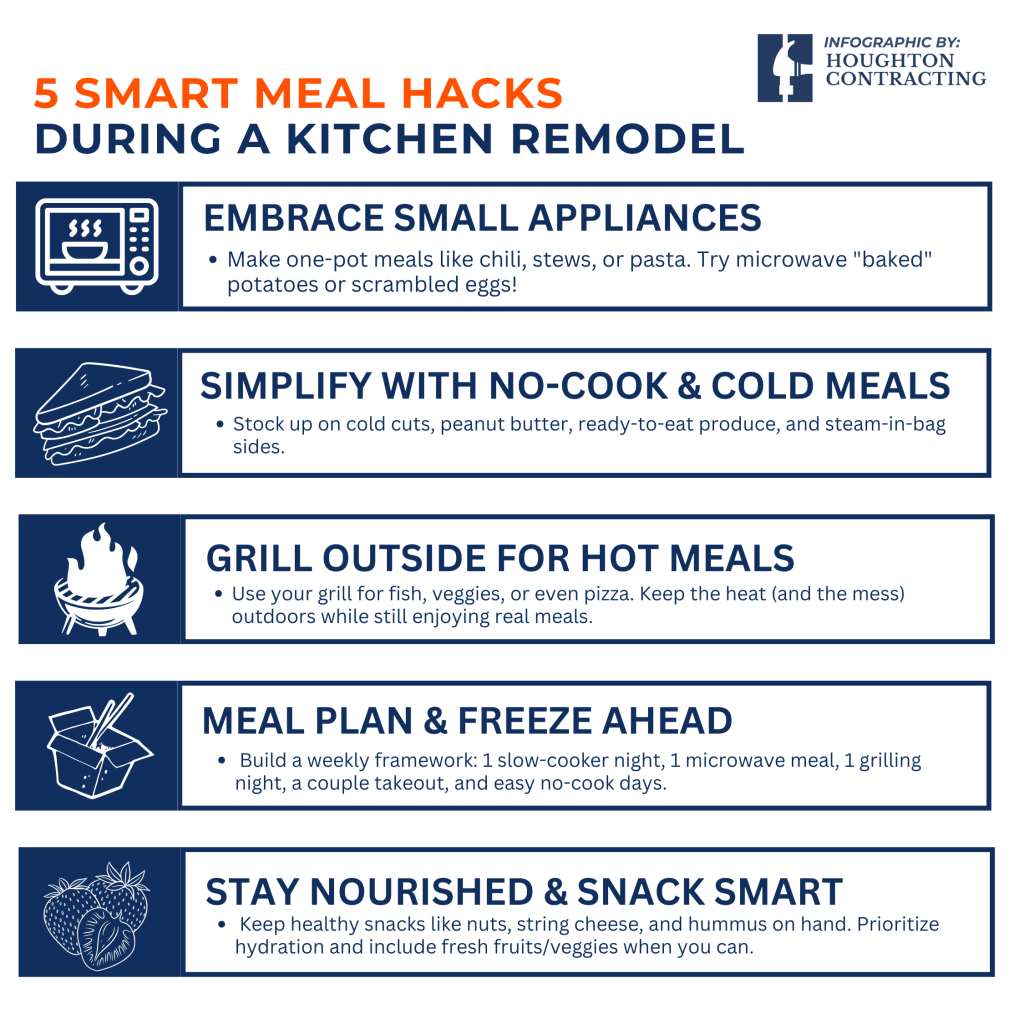
Meal Planning Tips
Don't let the lack of a stove stress you out. With a few smart strategies and the right tools, you can keep meals simple, tasty, and stress-free, no full kitchen required.
How to Wash Dishes Without a Sink
One of the peskiest daily challenges when your kitchen is under construction is washing dishes with no kitchen sink. It's definitely inconvenient, but with a little setup, you can do it safely and keep things sanitary. Essentially, you'll create a portable dishwashing station. The gold standard approach is the "three-bin" method that food safety experts recommend.
- Step 1: Scrape and Pre-soak. Scrape food scraps off your plates into the trash or compost before washing (use a paper towel to wipe oily plates). You might even want a small "scrap bowl" to collect food bits so you don't clog any sink or tub you're using. If something is very crusty, let it soak in a bit of water while you eat your meal.
- Step 2: Wash. Fill the first tub with warm, soapy water. (Warm water cuts grease better; around 110°F is ideal, but if you only have cold water, you can still wash; you'll just need to be diligent with the later steps). Add a few drops of dish soap to the water. Wash each dish with a sponge or dishcloth in this tub, just like you would in a sink. Pro tip: line the bottom of the tub with a towel to cushion and prevent scratches or breaks; this is especially useful if using a bathtub or metal sink for washing.
- Step 3: Rinse. Fill the second tub with clear water (no soap). This is your rinse water. After scrubbing a dish in the soapy water, dunk and swish it in the rinse tub to remove suds. If the rinse water gets too soapy or greasy over time, dump it and refill with fresh water as needed.
- Step 4: Sanitize. Here's the critical step that people often skip at home, but it's important when you don't have hot running water to really sanitize. Fill the third tub with a sanitizing solution: the standard recommendation is one tablespoon of unscented chlorine bleach per gallon of cool water. (Alternatively, if you were able to heat water, you could use very hot water above 170°F for sanitizing, but bleach works great and doesn't require hot water.) After rinsing, immerse the dishes in this sanitizing bath for at least 5–10 minutes. This will kill remaining germs and is especially important if you had to use cooler water to wash. Make sure your area is ventilated when using bleach (open a window in the bathroom, etc., and don't mix bleach with any other cleaners).
- Step 5: Air Dry. Finally, don't towel-dry the dishes; that can reintroduce bacteria from the towel. Air drying is the safest method. Set up a drying rack or designate a clean tray where you can place the sanitized dishes to drip dry. If space is limited, you might dry in batches. Using a clean dish rack on a tray or an old baking sheet can contain the water drips.
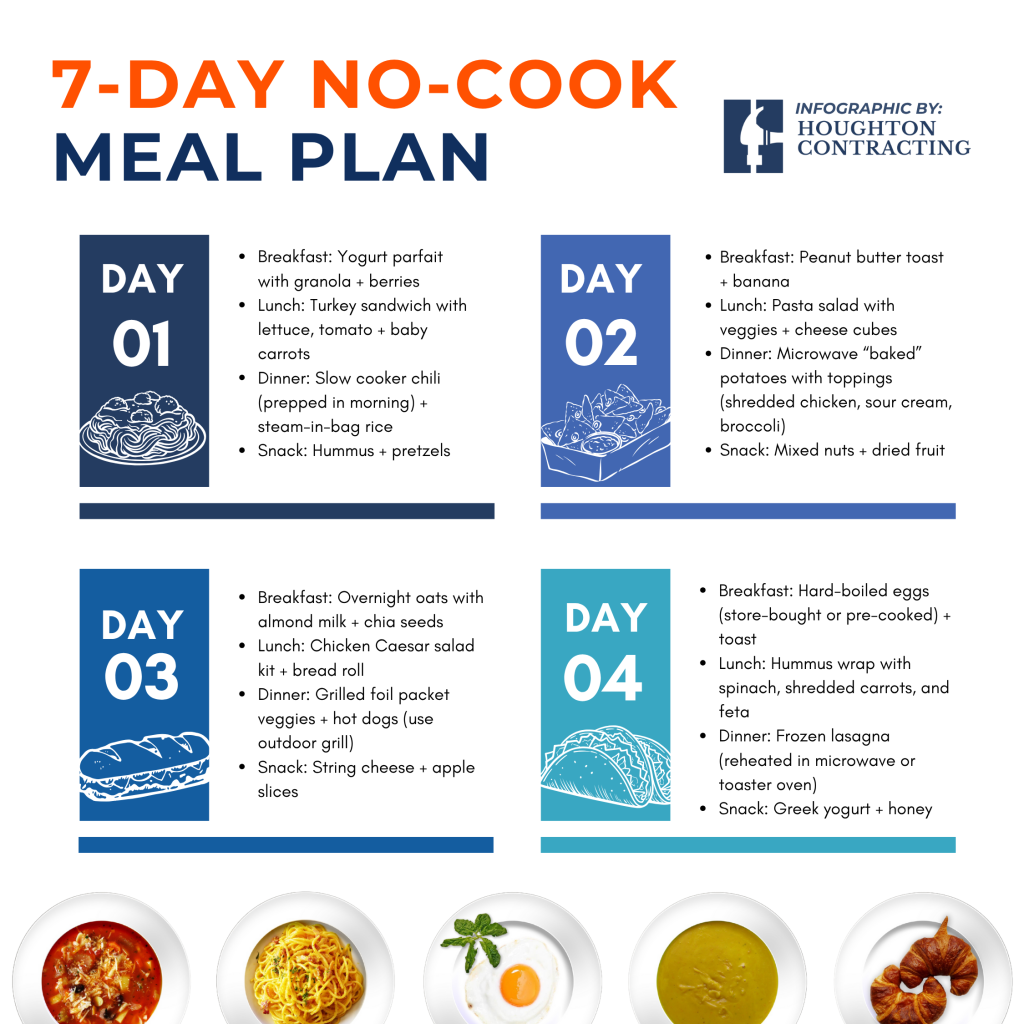
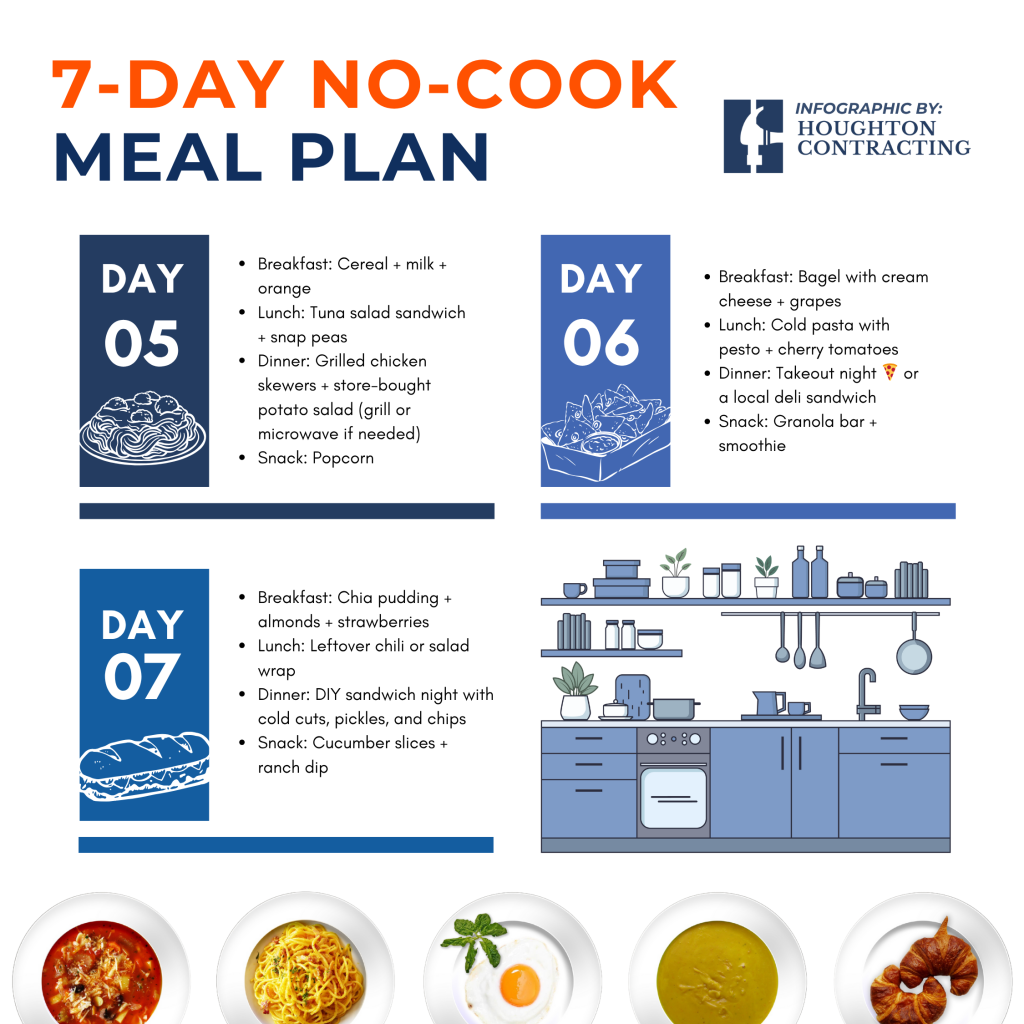
Remodeling your kitchen doesn't have to mean takeout every night. This 7-day no-cook meal plan is packed with easy, tasty meals that work with just a fridge, microwave, or slow cooker.
Keeping Your Home Clean & Safe
Remodeling creates dust, noise, and hazards, so keeping your home safe and livable matters. Contractors should set up dust barriers (like heavy-duty plastic over doorways and vents), but you can help too. Ask for proper containment if needed, and expect daily cleanups. Use damp mops and cloths to clean nearby surfaces, and vacuum often with a HEPA filter. After the project, replace your HVAC filters to remove lingering dust.
Keep kids and pets out of the work zone; use baby gates, locks, or temporary doors. Do a daily sweep for tools, nails, or other dangers. If you live in an older home, confirm that your contractor is certified for lead-safe practices and isn't cutting corners on safety (especially with asbestos or exposed wiring).
For ventilation, open nearby windows or ask your contractor to use low-VOC products and air scrubbers. And if noise is excessive, use earplugs or earmuffs, especially for kids.
Stay Flexible (and Sane)
Remodeling rarely goes exactly as planned; shipments get delayed, power gets shut off, schedules shift. Expect the unexpected and give yourself grace. Keep routines where you can (like movie night or evening walks), but allow for spontaneity too; sometimes takeout on paper plates is the best option.
Set aside one clean, clutter-free room in your home as a "safe zone." A peaceful retreat, even just to watch a show or have coffee, helps a lot. Celebrate small wins (like demo being done or floors going in) to stay positive.
When things get frustrating, remind yourself why you're doing this. Imagine the finished kitchen, cooking meals, gathering with family, enjoying the space you've dreamed of. It'll be worth it. Hang in there. You've got this.
Communication is Key, Working With Contractors
Before work begins, review the contract in detail. It should clearly outline the scope, materials, timeline, and payment terms; get any missing info in writing. Also discuss logistics: work hours, weekend availability, parking, bathroom use, and off-limits areas. Small details like these help prevent future misunderstandings.
During the remodel, check in regularly, daily if possible. A quick morning chat, text, or call can keep things on track. Don't hesitate to ask questions or raise concerns early. If something seems off, speak up right away. Good contractors want to address issues before they become bigger problems.
Change orders (changes to the plan) are common in remodeling. Maybe you decide mid-project to add an outlet, or you encounter an unforeseen problem that requires extra work. Any changes like this should be discussed and documented. Get any changes in writing, either an email confirmation or a formal change order document, including any kitchen remodel cost impact and schedule impact. This keeps everyone accountable and avoids confusion like "I thought that was included." Agree in advance on how you'll handle changes and surprises. Some homeowners keep a project notebook or binder to track everything: permits, plans, receipts, and notes from conversations. Keeping all project paperwork organized (contract, change orders, bills, warranties, etc.) is highly recommended. If a dispute or question arises, you can easily refer back to the records.
FAQs
How do I prepare for a kitchen remodel?
Clear out and declutter your kitchen. Set up a stocked temp kitchen with essentials like a microwave and toaster. Protect nearby areas from dust. Plan for no stove time with simple meals. Test for lead if your home is older. Talk with your household and expect some disruptions; prep early for a smoother experience.
How do you survive without a kitchen during renovation?
Set up a temp cooking area with small appliances. Keep meals simple; think sandwiches, salads, one-pot dishes. Use disposable dishes to cut cleanup. Eat wherever's comfy and use a bathroom or laundry sink to wash up. Budget for takeout now and then. Keep snacks on hand, stay flexible, and remember, it's temporary!
Where should I set up a temporary kitchen?
Pick a spot away from construction, like a dining room, basement, or garage, with access to power, a flat surface, and nearby water if possible. Use a table for appliances, bins for storage, and keep essentials handy. Add a tarp if it's carpeted. Stay organized, safe, and make it livable for a few weeks.
What should I eat during a kitchen remodel?
Quick Meal Tips During a Kitchen Remodel:
- Breakfast: Cereal, toast, yogurt, smoothies, microwave eggs.
- Lunch: Sandwiches, wraps, cold salads, canned soup.
- Dinner: Slow cooker meals, microwave potatoes, tacos, grill proteins, frozen meals.
- Snacks: Fruit, cheese, crackers, trail mix.
- Extras: Use takeout, rotisserie chicken, and pre-made grocery items. Keep cleanup easy!
How long will I be without a kitchen?
The timeline depends on your remodel's scope. A light remodel (new countertops, paint, flooring) usually takes 4–8 weeks, while a full gut renovation with plumbing or layout changes can stretch to 10–12 weeks or more, with 3 months being a safe average.
Conclusion
Living through a kitchen remodel is a challenge, no doubt, but with careful planning, flexibility, and a positive mindset, you can survive it and keep your sanity intact. The chaos is temporary, and the reward, a beautiful, updated kitchen, will be well worth the hassle.
At Houghton, we understand how daunting a kitchen renovation can be for a family. That's why our team is here to guide you every step of the way, from planning the project to helping you strategize the day-to-day living arrangements during construction. We have helped homeowners in Hamilton, Princeton, West Windsor, and throughout central NJ navigate this journey, and we're happy to share our experience (and maybe a few extra survival tips tailored to your situation!).
If you're preparing for a kitchen remodel, or even just considering one, please contact our team. We can help you plan effectively so that living through the chaos is as smooth as possible, and we'll work hard to keep your project on schedule. With the right team and the right preparation, your dream kitchen will be a reality before you know it, and you'll be back to cooking and making memories in a space you love.
Good luck with your remodel, and remember, a little planning and patience now will lead to a lifetime of enjoyment in your new kitchen!


/kitchen%20island%20with%20pendant%20lights%20and%20view%20to%20dining%20room%20in%20a%20houghton%20contracting%20custom%20home%20project%20in%20trenton%20new%20jersey.jpg?width=352&name=kitchen%20island%20with%20pendant%20lights%20and%20view%20to%20dining%20room%20in%20a%20houghton%20contracting%20custom%20home%20project%20in%20trenton%20new%20jersey.jpg)