.png?width=150&height=81&name=Houghton%20Contracting%20Logotype%20New%20Logo%20(1).png)
12 Min Read
Many homeowners dreaming of a kitchen makeover face a crucial decision early on: Should I remodel my kitchen myself, or hire a professional contractor? It's a common dilemma in an age of YouTube tutorials and home improvement TV shows.
In recent years, DIY home projects have surged. Between 2019 and 2021, homeowner spending on DIY improvements jumped 44% to a record $66 billion. Yet historically, the majority of remodeling work is still handled by professionals (fewer than 1 in 5 home improvement dollars are spent on DIY projects).
This blog will help you weigh the pros and cons of DIY vs. hiring a contractor for a kitchen remodel, so you can decide which route fits your budget, skills, and project scope.
Table of Contents
- DIY vs. Hiring a Contractor: Budget, Skills, and Scope
- When DIY Makes Sense: Ideal Tasks, Pros, and Cons
- When to Hire a Contractor: Complex Work, Legalities, and the Benefits of a Pro
- Not Sure If You Should DIY Your Kitchen Remodel or Hire a Pro?
- Cost Comparison: DIY vs. Professional Remodel
- Key Questions to Ask Before Going DIY
- How to Find and Vet a Contractor for a Kitchen Remodel
- The Hybrid Approach: Splitting the Work With a Pro
- FAQs
- Conclusion: Making the Right Choice for Safety and Quality
DIY vs. Hiring a Contractor: Budget, Skills, and Scope
Choosing between DIY and hiring a contractor comes down to three major factors: your budget, your skillset, and the scope of the project.
- First, consider the budget: DIY can eliminate labor costs, which often comprise a significant portion of a remodel's expense (contractor overhead and labor can add 20–30% to project costs). If you do the work yourself, your out-of-pocket costs might be lower. For example, recent survey data shows the average DIY home improvement project costs about $2,500, versus $6,350 for a professionally done project. However, saving money is not guaranteed; mistakes or inefficiencies can quickly eat into those savings.
- Next, take an honest look at your skills and experience. A kitchen remodel isn't a simple paint job. It can involve electrical wiring, plumbing, cabinetry, tiling, and more. If you're a seasoned DIYer with the right tools and knowledge, you might handle many tasks. But if you're relatively new to renovation work, a lack of expertise can lead to costly errors. In fact, one construction expert warns that an inexperienced DIY approach could end up costing 10–40% more than hiring a pro once you factor in mistakes and delays. Be realistic about what you can confidently tackle.
- Finally, assess the scope and complexity of your kitchen project. Is it a simple cosmetic refresh, like painting cabinets and replacing fixtures? Or a full gut renovation knocking down walls and moving plumbing lines? Smaller projects with a limited scope are more feasible to DIY, especially if they don't involve altering electrical or plumbing systems. Major renovations, on the other hand, often require multiple trades and careful coordination. Extensive work may also trigger building codes and permit requirements that are easier for a licensed contractor to navigate. Keep in mind that for many significant home improvements (room additions, structural changes, new wiring or plumbing runs, etc.), local laws require a permit, whether you do it yourself or hire someone. In short, the bigger and more complex the remodel, the stronger the case for hiring a qualified contractor. It's no surprise that professional contractors still handle the bulk of remodeling work in the U.S., given the expertise and efficiency they bring.
When DIY Makes Sense: Ideal Tasks, Pros, and Cons
DIY remodeling can make sense for certain kitchen updates, especially those that are minor, low-risk, and within a homeowner's capabilities.
Pros of DIY
- Cost Savings on Labor: By doing the work yourself, you save on labor fees. Since labor can account for a large share of remodel costs, DIY projects generally cost less. (In a national survey, the median DIY kitchen upgrade cost around $5,000, versus professional kitchen remodels that average $20,000–$50,000 depending on scope.) This budget advantage is a major motivator for DIY enthusiasts.
- Personal Satisfaction and Control: Many people enjoy the creative process and take pride in building something with their own hands. You have total control over the schedule, design choices, and every detail. There's a rewarding sense of accomplishment in completing a remodel yourself.
- Flexibility and Pace: Without a contractor's schedule, you can work at your own pace and on your own timeline. This might allow you to renovate in stages as time or money permits. You can also be more spontaneous with design changes as you go (though constant changes can become a double-edged sword).
Cons of DIY
- Time and Effort Intensive: DIY remodels can take significantly longer than professional jobs. You're essentially working nights and weekends on what a crew might do full-time. Remember that even "small" kitchen renovations often require 30–60 days of planning and many weeks of execution. Are you prepared to have your kitchen out of commission for an extended period? The time commitment and physical effort (heavy lifting, working in cramped spaces, etc.) shouldn't be underestimated.
- Skill Gaps and Risk of Mistakes: A kitchen remodel involves skilled trades: carpentry, plumbing, electrical, etc. If you lack know-how, you might make errors that affect the project's quality and safety. Mistakes can be expensive to fix and may even damage your home. For instance, improperly installing a sink could lead to leaks and water damage, and faulty wiring can create fire hazards (experts like Mike Holmes bluntly advise "ditch DIY" for any serious electrical wiring fixes). In the end, you might have to call in a professional to repair or redo work, erasing any DIY cost savings.
- No Warranties or Liability Protection: When you DIY, the only warranty is your own guarantee. If something fails, it's on you to fix. In contrast, reputable contractors often warranty their workmanship. Moreover, if an accident happens during the project, you'll bear the consequences, whereas a licensed contractor carries insurance to cover on-site injuries or property damage.
- Permit and Code Compliance: As a DIYer, you are responsible for researching and complying with building codes and permit requirements. This can be daunting if you're unfamiliar with the regulations. Work done without required permits can cause problems when you eventually sell the home, and failing to meet code can be dangerous. (Keep in mind that any permitted work will still need to pass inspection, even if you do it yourself.) Ensuring compliance often means learning local building codes or consulting with the building department, an extra layer of homework for the DIY remodeler.
- Hidden Problems and Surprises: Professionals have the experience to anticipate issues behind the walls; you might not. During demolition, you could uncover mold, asbestos, outdated wiring, or structural surprises that you're not equipped to handle. For example, one DIYer removed old flooring only to discover a subfloor with asbestos tiles, instantly turning a simple project into a hazardous materials remediation. These scenarios often require calling in licensed specialists, adding unplanned cost and complexity.
When to Hire a Contractor: Complex Work, Legalities, and the Benefits of a Pro
Hire a contractor in scenarios like: building or removing walls, altering the structural layout, extensive electrical work (adding new outlets, lighting circuits, or moving the stove's 240V line), major plumbing changes (re-routing sink, dishwasher, or gas stove lines), installing new HVAC or ventilation for a range hood, and dealing with any hazardous materials.
Aside from handling complexity, licensed contractors bring valuable expertise and efficiency. A seasoned general contractor has a network of vetted subcontractors (plumbers, electricians, cabinet installers, etc.) and knows how to schedule and coordinate them effectively.
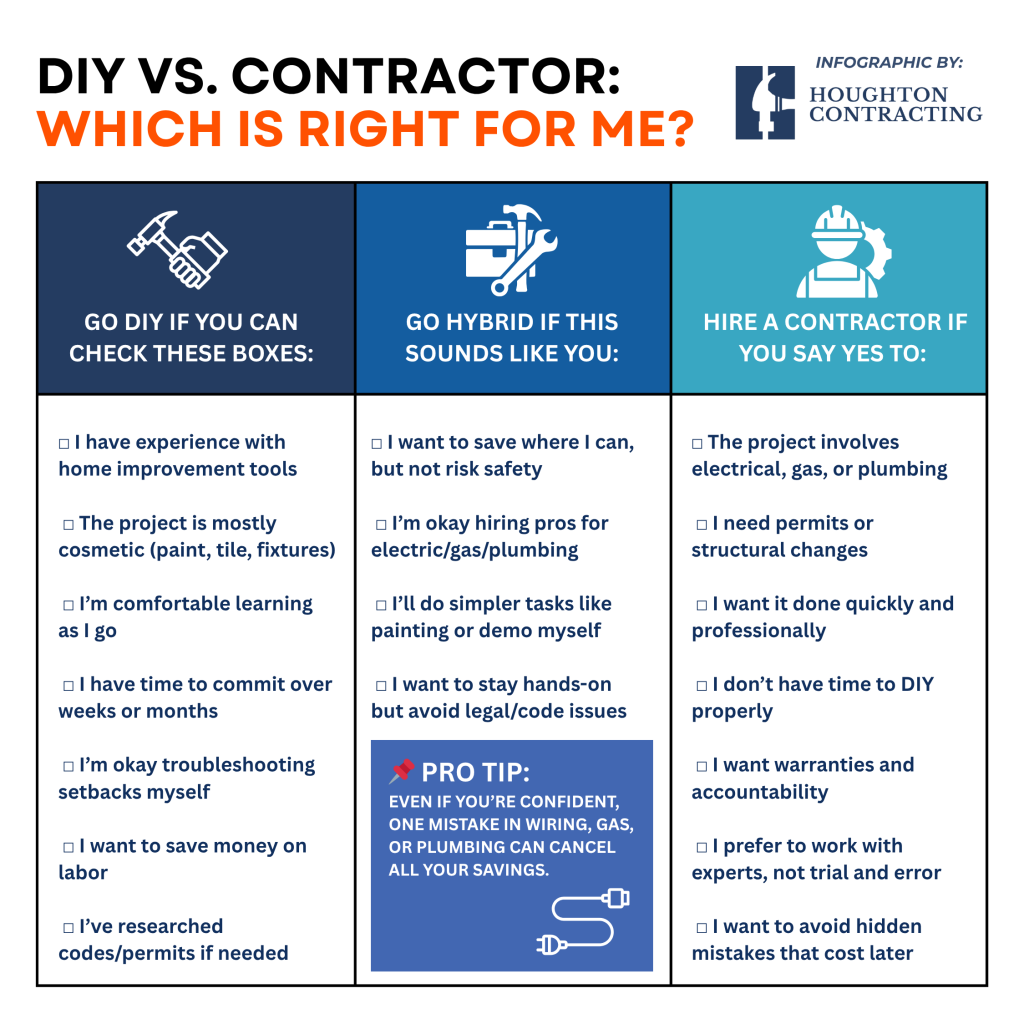
Not Sure If You Should DIY Your Kitchen Remodel or Hire a Pro?
Use this quick checklist to figure out what makes the most sense for your time, budget, and skills:
Cost Comparison: DIY vs. Professional Remodel
It's difficult to generalize the cost difference between DIY and hiring a pro, because it depends on the scope of work and how efficiently each route is executed. Nonetheless, there are some telling averages and scenarios.
According to national data, professional kitchen remodels typically cost anywhere from around $20,000 for a minor upgrade to $50,000 or more for a major renovation (luxury projects can far exceed that). These figures include full contractor services, materials, and labor. In contrast, a DIY kitchen remodel can be done for a fraction of that cost, often in the range of just a few thousand dollars if it's a surface-level refresh. The U.S. Census Bureau found that the median amount homeowners spent on a kitchen remodel (likely including many DIY or partial DIY projects) was about $5,000, which suggests many people limit projects to what they can afford out-of-pocket and handle themselves.
Why the huge gap? Labor and project management are big parts of a contractor's bill. If you're not paying a contractor, you're mainly buying materials, and you have control to choose cheaper materials or reuse elements to save money. However, DIY cost advantages can be misleading. Often, DIY projects are smaller in scope to begin with (you might not attempt a full gut remodel alone), so of course they cost less. If you tried to DIY an equivalent "major" kitchen overhaul that a contractor would do, your costs could creep up into the same ballpark, especially once you factor in unforeseen expenses.
One hidden cost is inefficiency or mistakes. A professional crew knows how to do things right the first time. If you DIY and something goes wrong, you may have to buy extra materials or even pay a pro to fix the error. That adds to the true cost of DIY. It's been observed that an inexperienced renovator could end up spending 10–40% more than a pro due to errors and wasted materials. For example, ordering the wrong size cabinets or mis-cutting expensive countertop material is money down the drain. There's also the possibility of damage. An accidental flood from a botched plumbing hookup or a burst pipe can cause thousands of dollars in repairs beyond the project itself.
On the flip side, doing some work DIY in a contractor-led project can reduce costs. Some homeowners choose a hybrid approach (discussed below) to save money. For instance, doing their own demolition and disposal can save a contractor's demo crew fee, or opting to do the painting and finish work themselves might trim the budget. If you're comfortable with those tasks, it can be a way to get the best of both worlds: the critical work is done by pros, and you pitch in sweat equity to lower the bill.
Key Questions to Ask Before Going DIY
If you're leaning toward remodeling your kitchen on your own, ask yourself some tough questions to gauge if DIY is truly feasible and wise for your situation. Consider the following:
- Do I have (or can I acquire) the necessary skills for each part of the project? Make a list of the tasks involved (design/layout, framing, flooring, cabinetry, plumbing hookups, electrical wiring, drywall, painting, etc.). Be honest about which of these you can handle to code-quality standards. It's okay not to know everything, few people do, but you should plan to bring in help for any tasks that are beyond your skillset. Read here about how to plan a kitchen remodel.
- Do I have the proper tools and equipment? A kitchen remodel often requires more than just a hammer and screwdriver. Think about tools like a power drill, circular saw, tile cutter, plumbing wrench, even potentially a jackhammer or reciprocating saw for demolition. Professionals come equipped with all these tools. If you DIY, will you rent or buy the needed equipment? Tool rental costs and purchasing specialty tools can add up, cutting into your DIY savings. Also consider if you know how to safely operate all tools, e.g. using a wet saw for tiles or dealing with live electrical testers.
- What is my plan for permits and inspections? As a homeowner, you are allowed to pull permits for work on your own residence in many areas (called an owner-builder permit). However, this means you assume the responsibility that a general contractor normally would. You'll need to research which aspects of the remodel require permits (often any structural, electrical, plumbing, or mechanical changes) and submit the applications to your local building department.
- How much time can I realistically devote to this project? Time is one of the most underrated factors in DIY decisions. If you have a full-time job and plan to renovate on evenings and weekends, recognize that the kitchen remodel could stretch out for a long period. Can your household function without a working kitchen for that duration? Do you have alternate cooking arrangements, and will that inconvenience be acceptable? Also, do you have the personal bandwidth to manage a big project alongside work and family obligations? It's common for DIY renovations to take two to three times longer than a contractor would take, due to the learning curve and limited hours of labor each week. Create a rough timeline and see if it's manageable and worth the savings to you.
- What will I do if I hit an unexpected problem or a portion of the project I can't handle? It's wise to identify in advance the "panic points." For example, if during demolition you uncover something like mold behind the sink or termite-damaged studs, what's your plan? Having a contingency budget (typically 10–20% of your budget) for surprises is prudent. Also, do you have a contractor or specialist you can call in a pinch? Some homeowners start DIY and then find themselves needing to hire a pro midway. There's no shame in that, but it can be harder to find someone willing to take over a half-done project. Think through how you'd pivot if needed.
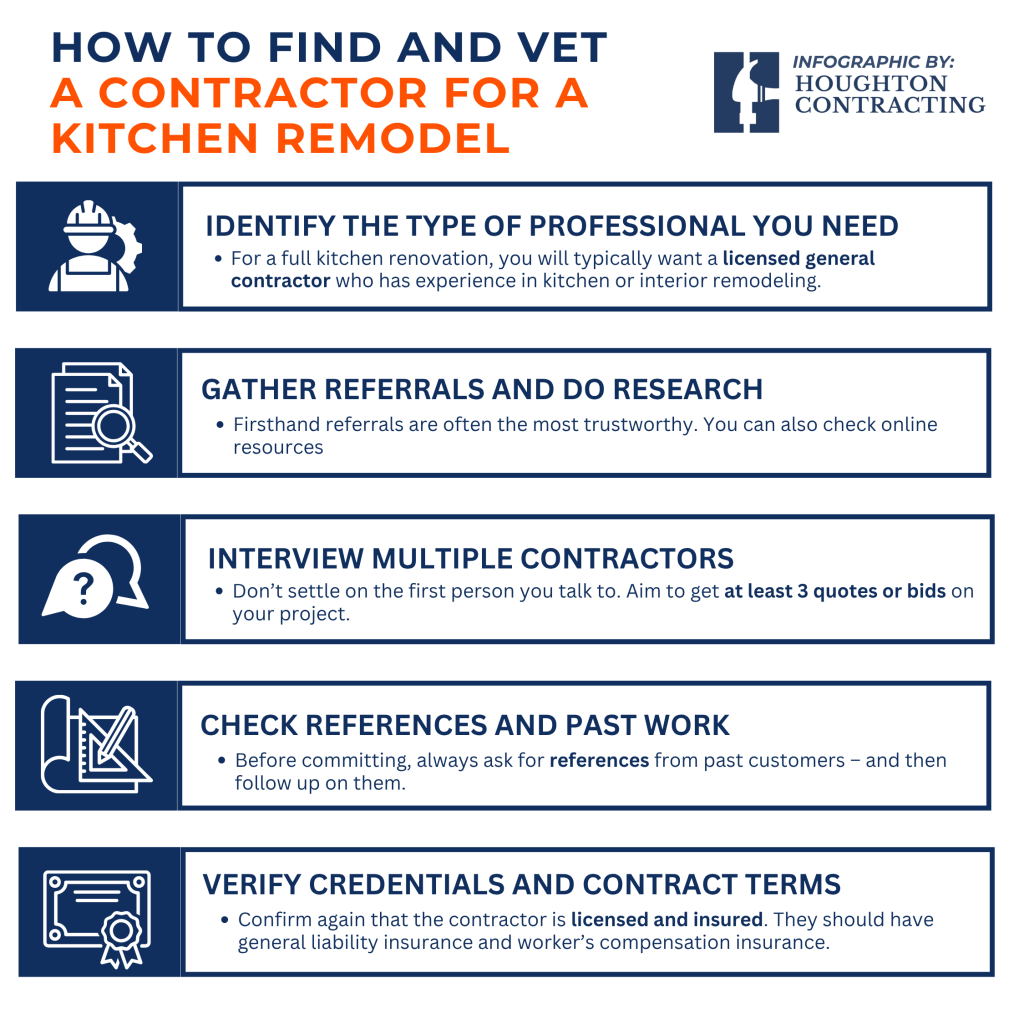
How to Find and Vet a Contractor for a Kitchen Remodel
Let's say you've decided to hire a professional. How do you find a reliable contractor for your kitchen remodel? And equally important, who should you hire for a kitchen remodel, what type of contractor or firm is best for the job? This section will guide you through the process of selecting the right pro to bring your kitchen dreams to life, while avoiding the common pitfalls.
The Hybrid Approach: Splitting the Work With a Pro
Not all kitchen remodels are an all-or-nothing DIY vs. contractor proposition. Many homeowners choose a hybrid approach, blending their own labor with professional help. This can take various forms, but the goal is to leverage the advantages of each method. For example, you might DIY the parts of the project you're comfortable with (and that carry lower risk) and hire a contractor for the rest.
Common hybrid examples: One of the most popular options is for the homeowner to do the demolition and removal of the old kitchen themselves, then bring in a contractor once the space is gutted and ready for build-back. Demo is labor-intensive but mostly straightforward: tearing out cabinets, pulling up old flooring, etc. By doing your own demo, you could save several thousand dollars in labor. (Just be very careful to turn off utilities and not knock out anything structural or embedded with wiring! Always verify what's behind a wall or under a floor before demolishing.) After demolition, you might also handle painting or minor finishing work at the end of the project. Painting walls or trim, for instance, is something many homeowners can DIY to save paying a painter. Another area to contribute might be site preparation or cleanup. You could do the daily cleanup, debris hauling, or even coordinate material sourcing while the contractor focuses on skilled work.
If you go this route, you may save on the contractor's fee but could incur higher costs elsewhere or face steep learning curves in managing a renovation schedule. The Washington Post interviewed a real estate professional who noted that while it is possible to save that contractor fee on paper, "you probably won't save much and you're assuming a lot of risk" as an inexperienced general contractor. In other words, only take on the GC role if you're prepared to deal with negotiations, timing, building codes, and any crises that arise. For many, it ends up being more stress than it's worth to save a bit of money.
The bottom line: A hybrid remodel can yield cost savings and personal satisfaction, while still ensuring critical work is done right. It's a great solution if you have moderate DIY skills or a limited budget. You can contribute labor to lower the price, but you're not left alone to handle the entire project. Many homeowners find this "best of both worlds" approach ideal: let the experts do what they do best, and roll up your sleeves on the tasks you feel confident doing. Just keep your limits in mind and coordinate closely with your contractor so the project stays on track.
FAQs
To wrap up, here are answers to some frequently asked questions for quick reference:
Q: Can I remodel my kitchen by myself?
Yes, it's certainly possible to remodel your own kitchen if you have the necessary skills, time, and dedication. Legally, homeowners are generally allowed to do renovation work on their own homes. You do not need to hire a contractor just to satisfy the law (as long as you follow building codes and obtain any required permits yourself). Many people successfully DIY smaller kitchen updates like painting cabinets, replacing countertops, or installing a new sink. In fact, about 39% of recent home improvement projects were DIY, so you're not alone in considering the DIY route.
Q: What should I not DIY in a kitchen remodel?
Skip the DIY on anything risky in a kitchen remodel. Electrical work, gas lines, major plumbing, structural changes, and hazardous materials all need licensed pros. Messing these up can lead to fires, explosions, or major damage, and some jobs even require permits or inspections. Stick to safer projects like painting, installing fixtures, or updating surfaces, and leave the high-stakes stuff to the experts.
Q: Do I need a licensed contractor to remodel my kitchen?
It depends on what you mean by "need." There's no law that says a homeowner must hire a contractor. You are allowed to act as your own general contractor on your property. However, if you decide to hire someone to do the work, in most cases you should hire a licensed contractor, and for certain jobs you must. Many states and cities require contractors to hold a license for any significant remodeling project (the exact rules vary, often based on project cost or the type of work). Hiring a licensed contractor is important because it means they have met minimum competency requirements and are accountable to a licensing board.
Q: How do I find a reliable kitchen remodel contractor?
Finding a good contractor takes a bit of homework. Start with referrals from people you trust, then check reviews on Google, Yelp, or Angi. Confirm licenses, insurance, and look for any complaints on record. Interview a few pros, get written estimates, and ask for (and actually call) past clients. If you can, visit a current job site. Don't go with the cheapest bid, go with the one who communicates clearly, shows up, and has solid references. A trustworthy contractor is transparent, experienced, and easy to work with.
Q: Is it cheaper to remodel a kitchen yourself?
Yes, DIY kitchen remodels can be cheaper upfront, mainly because you're skipping labor costs. You might save 20–30% compared to hiring a contractor. But factor in your time, tool costs, and the risk of mistakes. Errors can lead to do-overs or hiring a pro anyway, which adds unexpected costs. A DIY job that drags on or lowers home value isn't really saving you money. If you've got the skills, go for it, but be realistic. Many homeowners mix DIY with hired help to balance cost, quality, and time. Always budget for surprises.
Conclusion: Making the Right Choice for Safety and Quality
Choosing between DIY and hiring a contractor for your kitchen remodel is a personal decision, one that should be based on an honest evaluation of cost, complexity, and your own capabilities.
There is no one-size-fits-all answer. In fact, the best approach for many homeowners is a hybrid: DIY the tasks you're comfortable with and hire out the rest. For some, that might mean painting and minor installs themselves, while leaving plumbing, electrical, and complex construction to the pros. This way, you can save money and stay involved, without compromising on critical elements of safety and quality.
Remember, safety and quality should be the top priorities regardless of the path you choose. A kitchen remodel is an investment in your home's value and functionality, but also in your family's daily life. It needs to be done right.
If you ever feel in over your head, don't hesitate to consult with or hire a professional. It's better to spend a bit more than to put your home (or yourself) at risk. Conversely, if you're confident and prepared, don't be afraid to roll up your sleeves on some DIY aspects. Just do your homework, take your time, and adhere to best practices and codes.
Ultimately, whether you DIY or hire, the goal is a safe, beautiful kitchen that you can enjoy for years to come. Make the decision that will deliver that result with the least stress and risk for you. And remember, you're not alone. There are resources, experts, and communities to help whichever route you take.
Need help deciding or want a free contractor quote? Reach out today and let's make your kitchen remodel stress-free.