.png?width=150&height=81&name=Houghton%20Contracting%20Logotype%20New%20Logo%20(1).png)
12 Min Read
Kitchen remodels are one of the most common home improvements, and also among the slowest-moving. Transforming a kitchen isn't a weekend project; it requires careful planning and coordination. The timeline can stretch out longer than homeowners expect, especially if plans or materials aren't finalized early.
Table of Contents
- Key Takeaways
- What Affects Your Kitchen Remodel Timeline?
- Timeline by Project Type
- Kitchen Remodel Phases and Duration Breakdown
- Practical Tips to Keep Your Kitchen Remodel on Schedule
- Conclusion
- Kitchen Timeline FAQs (Frequently Asked Questions)
The scope of work and upfront planning are the biggest factors in how long your kitchen renovation will take. In fact, experts note that "some kitchens take weeks and some take months", it all depends on project complexity, material lead times, and how well you plan ahead. On average, a complete kitchen remodel from start to finish often spans several months .
Key Takeaways
- Typical Timeline Range: A kitchen renovation usually takes multiple months from planning through completion, not just a couple of weeks. Small cosmetic refreshes might finish in 4–6 weeks, whereas major kitchen overhauls can stretch to 6–8+ months.
- Planning vs. Building: Homeowners often spend twice as much time planning the remodel as actually building it. One survey found the average kitchen project involved ~9.6 months of planning/design and 5.1 months of construction in 2023. Good planning upfront can significantly shorten the overall timeline.
- Project Scope Matters: The scope of work drives the schedule. Cosmetic upgrades (paint, fixtures, etc.) are quick, while structural changes or layout reconfigurations add weeks or months. A straightforward pull-and-replace renovation may be done in 2–3 months, but a full gut remodel can easily take over 6 months.
- Expect the Unexpected: Build in a time buffer for surprises. Delays are common due to backordered materials, permit/inspection wait times, or hidden issues (like mold or outdated wiring lurking behind walls). Experts advise budgeting an extra 10–20% in time (and money) as contingency.
- Planning and Pro Coordination: To keep a kitchen remodel on schedule, plan meticulously and involve experienced professionals. Finalize all design decisions and order long-lead items (cabinets, appliances, countertops) well in advance. Hiring a qualified general contractor or kitchen remodeler can help coordinate trades and prevent costly downtime, ensuring the project stays on track
What Affects Your Kitchen Remodel Timeline?
Why do some kitchen remodels finish in a month while others drag on for half a year or more? Several key factors influence the timeline:
- Scope of Work: The extent of the renovation is the #1 driver of timeline. If you're sticking to surface changes (repainting cabinets, updating hardware, new appliances), the project is mostly cosmetic and can be done much faster. But moving walls, rerouting plumbing or gas lines, or changing the layout will lengthen the schedule considerably.
- Material Lead Times: Your material choices can add weeks or months. Custom or special-order items tend to have long lead times, for instance, custom cabinetry might take 8–16 weeks for delivery. Even semi-custom cabinets often need about 6–8 weeks of fabrication. Likewise, certain high-end appliances, specialty fixtures, or unique tiles could be backordered.
- Permits and Inspections: If your remodel involves electrical, plumbing, structural changes, or additions, you will likely need building permits and city inspections at various stages. Obtaining permits can take anywhere from a few days to several weeks depending on your local building department's backlog.
- Contractor Scheduling & Trades Availability: Good contractors are often in high demand. If you hire a reputable general contractor or kitchen specialist, they may have a waiting list of several weeks or months before they can start your project. Similarly, certain skilled trades (like countertop fabricators, tilers, or finish carpenters) might not be available exactly when you need them unless booked well in advance.
- Home Age and Surprise Issues: The condition and age of your house play a big role. In newer homes with standard construction, a remodel may go relatively smoothly. In contrast, older homes (decades old) tend to hide surprises behind the walls, think mold, old wiring, improper past repairs, termite damage, crooked framing, you name it. As a rule, "unexpected delays can occur if structural deficiencies are found when walls or floors are opened up"
Timeline by Project Type
Not all kitchen remodels are created equal. Here we break down timelines for three broad categories of projects, small facelifts, mid-range remodels, and full renovations, to illustrate how scope impacts duration.
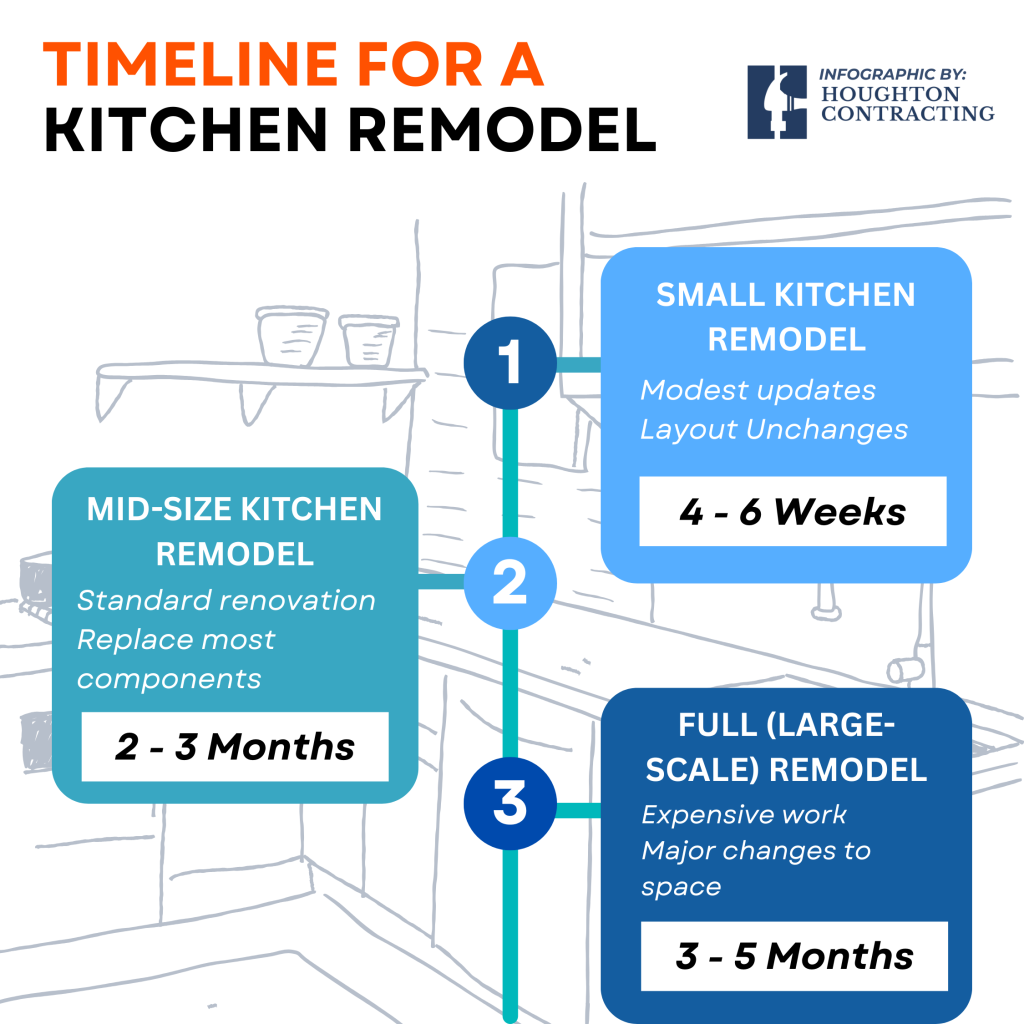
Small Kitchen Remodel Timeline (Approx. 2–6 Weeks)
A small-scale kitchen remodel typically means a primarily cosmetic refresh. You're updating the look without major construction. Examples include: painting or refacing cabinets instead of replacing them, swapping out hardware, upgrading appliances, installing a new backsplash or countertop, and perhaps new light fixtures. The key is no structural changes and generally keeping the same kitchen layout.
Such a project is far less intensive than a full remodel and can often be completed in a matter of weeks. In many cases, 4–6 weeks is a reasonable timeframe for a basic kitchen makeover. The construction work might only be a couple of weeks (since you're not gutting everything), plus some planning and waiting for any new fixtures to arrive. In fact, the National Kitchen & Bath Association (NKBA) suggests simple improvements or minor changes can sometimes be done in roughly one to one-and-a-half months.
If you're organized and even DIY-inclined, a small remodel can go even quicker, some homeowners handle projects like painting cabinets or installing a faucet themselves over a few weekends. This DIY approach can save money and time on scheduling a contractor, but only if you know what you're doing and plan properly. The risk of DIY is that inexperience can lead to mistakes (which then take more time to fix), so be realistic about your skills. For a truly cosmetic update (no permits needed), DIY is very feasible and could compress the timeline since you're not waiting on a pro's calendar. Just ensure you have all materials on hand before you start, and try to follow a logical sequence (e.g. do all painting before you install the new backsplash, etc.).
Tip: Even for a small remodel, planning upfront is crucial. Make your design decisions early and purchase all the materials/appliances needed ahead of time. Since the project is short, any delay (like a backordered faucet or a late appliance delivery) can disproportionately hold things up. The good news is small jobs have fewer moving parts, no drawn-out permits or inspections, fewer trades involved, so you have more control over timing. Many homeowners find that a "freshen-up" kitchen remodel is often completed in about 1 to 1.5 months total, delivering a new look without the long wait.
Mid-Size Kitchen Remodel Timeline (Approx. 8–12 Weeks)
A mid-size kitchen remodel can be thought of as a standard or "pull-and-replace" renovation. In this category, you are doing more than just surface updates, but it's not a complete reconfiguration of the space. Typical characteristics:
- Replacing old cabinets with new (often semi-custom or stock cabinetry in the same general layout).
- New countertops and flooring.
- Possibly upgrading appliances and fixtures.
- Maybe a minor layout tweak or two, for example, extending cabinetry, adding an island, or relocating an appliance a short distance, but no major wall removals or additions. The kitchen stays roughly the same size and shape.
- Likely requires permits if you're updating electrical or plumbing hookups, but not as complex as moving the kitchen to a different room or knocking down load-bearing walls.
For a mid-range project, the active construction phase is often around 2–3 months (8–12 weeks). That includes demo, installing new cabinets, floors, counters, and all finishes. Add to that the upfront planning and product lead time, and you're typically looking at about 3 to 4 months total from project start to finish. Many remodeling experts cite the 3-4 month mark as common for a standard kitchen overhaul of this scale, assuming no big hiccups.
Full Kitchen Remodel Timeline (3–6+ Months)
A full kitchen remodel is the big job, often called a gut renovation. This involves a comprehensive overhaul of the kitchen space, and possibly even expanding or reconfiguring the kitchen's footprint. Characteristics of a full remodel:
- Demolition to the studs of the kitchen, and often removing or moving walls. You might be knocking down walls to open up to a dining room, or building an extension to enlarge the kitchen.
- Layout changes are common. Perhaps the sink and stove are relocating, or an island with a sink/gas cooktop is being added where nothing existed before. This triggers significant plumbing, electrical, and HVAC work (venting, etc.).
- Installation of all new infrastructure: new wiring (often a new dedicated circuit breaker for the kitchen, as required by modern code), new plumbing lines, possibly new subfloor or ceiling work, and even moving windows/doors in some cases.
- Custom or high-end materials: Full remodels often use custom cabinetry, higher-end appliances, and other specialty finishes that have longer lead times.
- Extensive permit and inspection requirements, since multiple building systems are being altered. Structural engineering may be needed if you're removing load-bearing walls or adding onto the house.
Kitchen Remodel Phases and Duration Breakdown
It's no surprise that these comprehensive projects take the longest. For a large, full-scope kitchen remodel, 3 to 6 months of construction is common, and some particularly complex renovations can run well beyond 6 months. In total, from the initial planning through final completion, you could be looking at 5 to 8 months or more. The NKBA's consumer guide notes that a full-scale kitchen remodel can easily take "six to eight months or more" overall, aligning with real-world experiences.
Let's consider an example: imagine remodeling a 1940s-era kitchen that hasn't been updated in decades. You decide to knock down a wall to join kitchen and dining space, replace all the old plumbing and electrical, get custom cabinets made, and upgrade to professional-grade appliances. Here's how the timeline might play out:
- Planning/Design: could be 2–3 months working with an architect or kitchen designer, getting plans drawn and engineering done (especially for removing walls or vaulting a ceiling, etc.). You'd also be selecting all finishes in this phase.
- Permitting: maybe 1 month for city approval of plans (sometimes longer if revisions or zoning approvals are needed).
- Lead time waits: custom cabinets might take 3–4 months to build; high-end range or fridge might have a 10-12 week lead time if not in stock. You'd ideally order these early.
- Demolition and rough construction: taking down walls, reframing new ones, maybe relocating a support beam, this is a major construction effort. Perhaps 2–4 weeks for structural work. Rough-in of all utilities could be another 3–4 weeks. If unforeseen problems arise (very likely in an old kitchen, e.g. finding asbestos that requires abatement, or subfloor water damage to repair), add more time here.
- Inspections: there may be multiple interim inspections (framing, rough electrical, rough plumbing, etc.), each of which might add a few days waiting.
- Installation of finishes: once the room is ready, installing the custom cabinets might take 2+ weeks (more cabinets and more intricate fits than a standard kitchen). Countertop templating/fabrication as discussed could add a few weeks. Appliance installation might involve additional electrical or gas work that extends the schedule. Backsplash, flooring, finishing carpentry, all will be on a larger scale than a small kitchen, hence could take a couple of weeks in total.
- Overall, it's not unusual for such a project to run 5 or 6 months of actual on-site work. Some homeowners report even longer for very high-end or complex jobs (e.g. historic home renovations where surprises and design changes happen).
One real-world case study: A family renovating a 1940s home's kitchen in a full gut remodel reported about 5 months of construction time to complete it (this included completely new wiring, plumbing, and opening up walls). Old homes especially require that extra TLC and time.
Why do full renovations often overshoot initial time estimates? There are several reasons:
- Custom items causing delays: If one critical component is late (say the custom cabinets ship 3 weeks behind schedule), everything else gets pushed back.
- Inspection or contractor scheduling holdups: Waiting for inspectors or a particular subcontractor (like the countertop fabricator or a tile specialist) can create gaps.
- Change orders: In a long project, homeowners sometimes change their mind on designs or add scope (e.g. "Actually, let's also replace the window and move the door"). Every change order mid-project can add time, as new materials must be ordered or work redone. It's an avoidable cause of delay if you finalize decisions early, but it happens.
- Unforeseen structural issues: As mentioned, old houses can hide nasty surprises. A full reno has more opportunity to uncover problems behind walls or under floors that must be addressed (for safety or code compliance) before proceeding. A common saying is that "there's always something behind the walls" that you weren't expecting, whether it's mold, faulty wiring, or unconventional construction, and it inevitably adds work.
Practical Tips to Keep Your Kitchen Remodel on Schedule
Staying on schedule (or close to it) is one of the biggest challenges in a kitchen remodel. While some factors are out of your control, many proactive steps can help prevent unnecessary delays. Here are some tips to manage your timeline effectively:
- Plan and order materials well in advance: The pre-construction phase is crucial. Select your appliances, cabinets, fixtures, and finishes early, and order long-lead items ahead of time. Remember that custom cabinets may take 8–16 weeks to arrive and even items like specialty tiles or fixtures can have weeks-long lead times. Don't wait until after demolition to order key components, they should be on their way (or in your garage) by the time work begins. This way, contractors aren't left twiddling their thumbs waiting for a part to arrive.
- Communicate your timeline goals and keep in touch: Clear communication with your contractor and designers can prevent many delays. Let them know if you have a desired completion date (for example, "I'd love to have this done before Thanksgiving"), they can give you a realistic estimate and schedule subs accordingly. Throughout the project, stay in regular contact about progress and decisions they may need from you. If something unexpected comes up, prompt decisions and communication can keep it from derailing the schedule. In short, be an involved (but not intrusive) client: respond quickly to questions, and don't be afraid to ask for schedule updates.
- Secure permits early and understand the inspection process: If permits are required, submit applications as soon as you have plans and factor the approval time into your schedule. Find out the typical wait times from your municipality. Once construction is underway, schedule required inspections promptly to avoid idle days. For instance, if plumbing rough-in will finish Wednesday, try to get the inspection Thursday so work can resume immediately after approval. Delays in inspections or paperwork are a common timeline extender, staying on top of them can save you weeks.
- Anticipate the countertop gap: As noted, many projects hit a pause waiting for countertop fabrication. One way to mitigate this is to pre-schedule the countertop templating as early as possible. Some contractors measure for countertops the day cabinets are installed and put a rush on fabrication. You can also choose alternatives that reduce wait time (e.g. modular or pre-cut countertop systems). If you know there will be a 2-week counter gap, plan other work during that time, maybe do painting or install lighting while waiting. Being aware of this common delay means you can strategize around it.
- Build a buffer into the schedule: Perhaps the most important tip: expect the unexpected. There is almost always something that doesn't go exactly as planned, a surprise leak, a material delay, an illness, or simply a task that takes longer than estimated. Professionals often add a contingency of 10–20% extra time in project schedules for this reason. You should too. If you think a realistic timeline is 8 weeks, consider it might be 10. Buffer time is especially critical if you have a hard deadline (like moving in or hosting an event); better to finish early than miss an immovable date. As one expert wisely noted, you should "expect the unexpected" because no kitchen remodel goes 100% perfectly.
- Avoid last-minute changes: One of the biggest schedule disruptors is a mid-project change order, for example, deciding after the cabinets are in that you'd rather relocate the dishwasher. Changes can require redoing work or ordering new parts, which definitely adds time. To stay on schedule, make and finalize decisions during the planning phase as much as possible. If a change becomes necessary, understand its impact on time and try to adjust other tasks to compensate. In short, stick to the plan once work begins, unless it's absolutely critical to change it.
- Work with experienced pros (or be realistic if DIY): A seasoned general contractor who specializes in kitchens will have the process down to a science and can often schedule trades tightly to reduce downtime. They can also anticipate common pitfalls and navigate them efficiently. Hiring reliable professionals may cost more up front, but can save time overall. If you plan to DIY major parts of the remodel, be very honest about your own bandwidth, if you only have evenings and weekends to work on it, your timeline will be longer. Sometimes people start DIY and then call in pros when it drags on; instead, either commit fully to doing it (and accept a longer timeline) or delegate to pros for a faster finish.
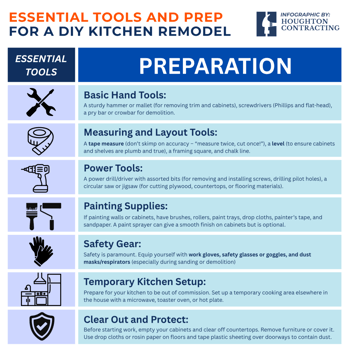
- Prepare your household for the remodel period: While this isn't a direct scheduling tactic, it's a sanity-saver. Set up a temporary kitchen with a microwave, toaster oven, and fridge in a convenient spot so you can manage without a kitchen. This way, if the project runs longer, it's an inconvenience not a crisis. Also, consider arranging off-site meals or stays during the messiest parts (some homeowners plan a vacation during demolition week, for example). Being mentally and logistically prepared for a certain duration makes the timeline easier to handle, and you'll be less tempted to rush the work (which could compromise quality).
By following these tips, you'll greatly improve your chances of a smooth remodeling process. In essence: plan ahead, communicate often, and be flexible. Timelines can shift, but good planning and management will keep those shifts minor. Now, let's address some common questions about kitchen remodel lengths in our FAQ section.
Conclusion
A kitchen remodel in 2025 remains one of the most rewarding but time-intensive home projects you can undertake. We've seen that timelines can range from a few weeks for a modest facelift to many months for a full custom renovation. Understanding these timeframes is just as important as understanding the costs, after all, time is an integral part of your renovation budget.
The key takeaways are to plan ahead and be realistic. Approach a kitchen remodel with the expectation that it will take some time to get everything right. By planning thoroughly, making decisions early, and accounting for inevitable surprises, you can keep your project on a reasonable schedule and reduce stress. When you know what to expect, the process becomes much more manageable.
Remember that a kitchen is the heart of the home, and rebuilding that heart is a complex operation. But the payoff is huge: a beautiful, functional kitchen that you'll enjoy for years to come. Keeping one eye on the timeline (and building in some buffer) will help ensure that when your dream kitchen is finally complete, the journey to get there will have been as smooth as possible.
Ready to get started? If you're considering a Kitchen Remodeling Service, the best next step is to talk to a professional about your specific situation. Every project is unique. You can get a custom project timeline from a certified kitchen remodeler based on your goals and home, they'll outline how long each step should take for you. Having an expert timeline in hand will give you confidence and clear expectations from day one. Don't guess at the schedule, let a pro map it out accurately.
Kitchen Timeline FAQs (Frequently Asked Questions)
Q: How long does a small kitchen remodel take?
Most small remodels take 4–6 weeks of construction, plus extra time for planning. Total: 1–2 months.
Q: Which phase causes the most delays?
Planning and ordering materials often cause more delays than actual construction. Long lead times and indecision slow things down.
Q: Can I live at home during a kitchen remodel?
Yes, but expect inconvenience. Your kitchen will be out of use, so set up a temporary kitchen elsewhere.
Q: How much extra time should I plan for?
Add 10–20% extra to your timeline for delays like permits or late deliveries. Better to finish early than run behind.
Q: How can I speed up a remodel?
- Finalize plans and order materials before starting
- Choose in-stock items
- Hire a reliable general contractor
- Be responsive during the process
- If possible, move out temporarily to let the crew work faster
Remember, speed should not come at the expense of quality or safety. Don't rush so much that corners are cut, you don't want to redo shoddy work later. But smart planning and professional help can compress the timeline significantly. Many efficiency gains come from simply avoiding downtime: if every day some work gets done and there are no idle waiting periods, your remodel will finish as fast as it realistically can.


/kitchen%20island%20with%20pendant%20lights%20and%20view%20to%20dining%20room%20in%20a%20houghton%20contracting%20custom%20home%20project%20in%20trenton%20new%20jersey.jpg?width=352&name=kitchen%20island%20with%20pendant%20lights%20and%20view%20to%20dining%20room%20in%20a%20houghton%20contracting%20custom%20home%20project%20in%20trenton%20new%20jersey.jpg)
/kitchen%20wall%20of%20cabinetry%20with%20built%20in%20oven%20and%20microwave%20in%20a%20houghton%20contracting%20custom%20home%20project%20in%20trenton%20new%20jersey.jpg?width=352&name=kitchen%20wall%20of%20cabinetry%20with%20built%20in%20oven%20and%20microwave%20in%20a%20houghton%20contracting%20custom%20home%20project%20in%20trenton%20new%20jersey.jpg)