.png?width=150&height=81&name=Houghton%20Contracting%20Logotype%20New%20Logo%20(1).png)
14 Min Read
The Dilemma: Homeowners often face a tough choice, should you remodel your existing home or buy a new one? Both options have advantages and drawbacks. Remodeling can tailor your current house to your needs, while buying new might get you a house that already has what you want. Deciding isn't just about preferences; it's also about finances, timing, and personal circumstances.
Financial Considerations: A key factor in this decision is your home equity, the difference between your home's market value and what you still owe on your mortgage. If you have built up substantial equity, you can potentially tap into it to finance a renovation instead of taking on a new primary mortgage. Many homeowners use home equity loans or lines of credit for improvements
Home equity can be a powerful tool to fund a remodel, but it puts your house on the line if you can't repay. On the other hand, selling your home means cashing out your equity (after paying selling costs) to help buy the new house.
Table of Contents
- Key Takeaways
- Understanding Home Equity for Remodeling
- Remodel or Move? Making the Right Financial Choice
- Smart Financing Strategies for Your Home Remodel
- Conclusion
- FAQs (Frequently Asked Questions)
Key Takeaways
- Home Equity as a Remodeling Tool: Home equity is the value of your home minus any mortgage debt. You can tap this value through options like a home equity loan, a HELOC, or a cash-out refinance to fund renovations. These often have lower interest rates than unsecured loans, but using your home as collateral comes with risk, if you fail to repay, the lender can foreclose on your home. Always balance the benefit of lower rates against the risk of putting your house on the line.
- Remodel vs. Buy, Compare Total Costs: Don't just compare project costs to purchase price. Remodeling costs can range widely (e.g. mid-range kitchen remodel ~$23k; major remodel $60k+ and often run over budget, experts recommend budgeting an extra 10–20% for surprises. Moving to a new home entails "hidden" costs: realtor commissions, closing fees, and moving expenses can eat 5–10% of the sale price plus thousands more in mover fees. Many sellers also spend on repairs/staging to sell.
- Market and Personal Factors Matter: Your decision should fit your life. Consider current real estate market conditions, in a seller's market you may profit on your sale but face high purchase prices, whereas in a buyer's market you might get a deal on a new home but sell low. High mortgage rates can make staying put attractive (many owners hesitate to swap their low-rate mortgage for a new high-rate loan)
- Smart Financing and Budgeting are Key: Whether you decide to remodel or to buy a different home, plan your finances carefully. If remodeling, choose a financing option that suits your situation: for example, a fixed-rate home equity loan for a one-time project, or a HELOC for flexibility. Compare interest rates, terms, and fees, and consider government-backed loan renovation mortgage) for potentially lower down payments or rates. Keep remodeling costs under control by setting a firm budget (with a contingency buffer), getting multiple contractor bids, and avoiding scope creep.
Understanding Home Equity for Remodeling
How to Use Home Equity to Remodel Your Home
What is Home Equity? Home equity is the portion of your home's value that you truly "own." In simple terms, home equity = current market value of your home – remaining mortgage balance. As you pay down your mortgage (or as your home value rises), your equity grows. This equity is an asset you can borrow against. For example, if your home is worth $300,000 and you owe $200,000 on your mortgage, you have $100,000 in equity. Lenders typically won't let you borrow all your equity, you might be able to tap a portion of it while keeping, say, 15–20% equity in the home as a cushion
Financing Options Using Home Equity
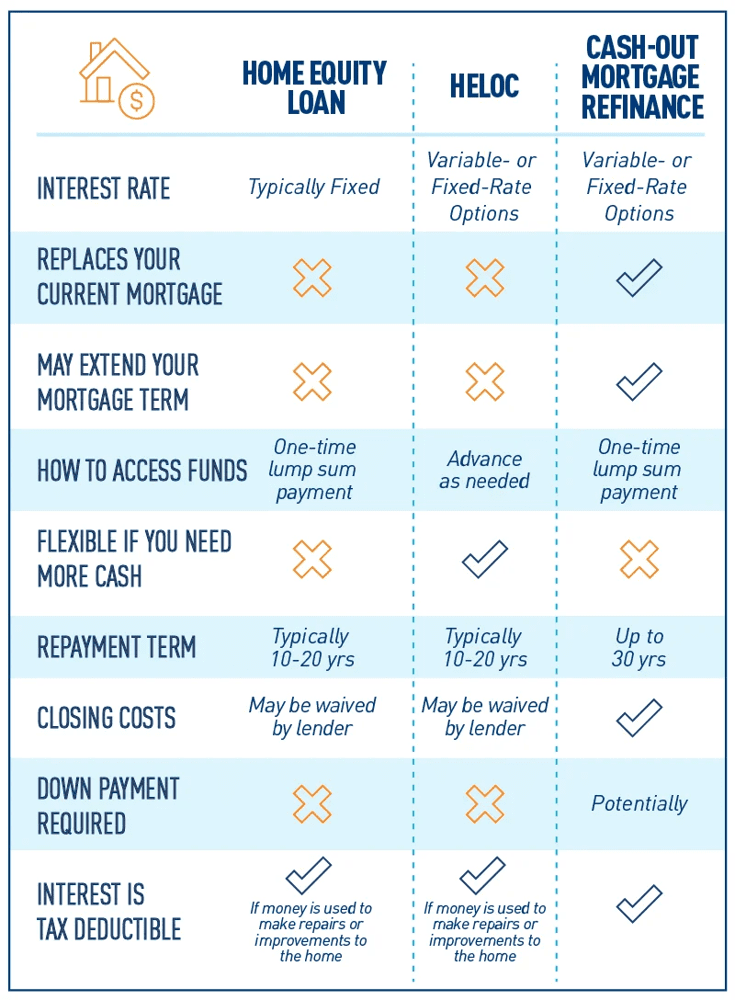
- Home Equity Loan (Second Mortgage): This is a one-time loan secured by your home, often called a second mortgage. You receive a lump sum of money upfront, and repay it with fixed monthly payments over a set term (often 5–20 years). The interest rate is usually fixed so your payment stays the same. Home equity loans are good for funding a specific remodel project when you know the amount needed. Most lenders require that after taking the loan, you still retain some equity (they may lend up to ~80–85% of your home's value minus existing mortgages). Because your home is collateral, the interest rate is typically lower than a personal loan. However, you now have two mortgages: your original mortgage and the new second loan.
- Home Equity Line of Credit (HELOC): A HELOC works more like a credit card secured by your home. The bank approves a credit line up to a certain limit (for example, $50,000) and you can withdraw money as needed during a "draw period," only paying interest on what you use. HELOCs usually have a variable interest rate that can change with the market (though some offer fixed-rate options).
During the draw period (often 5–10 years), you might pay interest only; then the HELOC enters a repayment period (commonly 10–20 years) during which you can no longer withdraw and must pay principal and interest. HELOCs are flexible, great if you have a long-term renovation with expenses in stages, or if you aren't sure exactly how much you'll need. They allow "borrow as you go" convenience. Just like a credit line, you could borrow, pay it down, and borrow again within the draw period. The key downside is the interest rate may rise over time, since it's often variable. Also, the lender can freeze or reduce your credit line if your home value significantly drops
- Cash-Out Refinance: This option refinances your existing mortgage and lets you pocket cash from your equity. Essentially, you replace your current mortgage with a new, larger mortgage. The new loan pays off your old mortgage and the extra amount is given to you in cash at closing. For instance, if you owe $150,000 on your mortgage and need $50,000 for renovations, you refinance into a $200,000 mortgage; $150k goes to pay off the old loan and you get $50k cash (minus closing costs). A cash-out refi is basically one new loan, you still have just one mortgage payment.
It can be a good choice if current refinance rates are equal or lower than your existing mortgage rate, or if you prefer not to juggle two loans. But if today's rates are higher than your current rate, a cash-out refi could raise your monthly payment (since you're refinancing the entire debt at a higher rate). Also, you'll pay typical mortgage refinancing closing costs (appraisal, origination fees, etc.). Lenders usually require you to keep at least 20% equity after a cash-out refi– in other words, you can't pull all your equity out. This option makes sense if you have a lot of equity and could even potentially improve the rate or term of your mortgage while borrowing for improvements.
Pros & Cons of Using Home Equity for RemodelingUsing your home equity for a renovation can be smart in some cases, but it's not always the right move. Here are key advantages and disadvantages to consider before you borrow against your house:
Pros (When Using Home Equity Makes Sense):
- Potentially Lower Interest Rates: Since home equity loans and HELOCs are secured by your house, they typically carry lower interest rates than unsecured personal loans or credit cards. This can make borrowing for a remodel more affordable over the long term. For example, a bank will often offer a much lower APR for a HELOC than a credit card because the home is collateral.
- Large Sums Available: If you've built up substantial equity, you might be able to borrow a significant amount for a major project. Lenders often allow borrowing up to 80–85% of your home's value (total of your mortgage plus new equity loan). This means if you've owned your home for years and its value has grown, you can undertake extensive renovations that might be hard to finance otherwise
- Possible Tax Deduction: Interest paid on home equity loans or HELOCs may be tax-deductible if the funds are used to "buy, build, or substantially improve" your home that secures the loan. For example, if you take a home equity loan to add a bedroom or remodel a kitchen in your primary residence, the interest could be deductible (subject to IRS rules and loan limits). This can effectively lower the net cost of borrowing. Always confirm current tax laws or consult a tax advisor, as rules can change (interest on equity debt used for non-home purposes, like paying off credit cards, is not deductible under current law.
Cons (Risks and When It Doesn't Make Sense):
- Your Home is on the Line: The biggest risk of tapping home equity is that your house is collateral. If you cannot repay the home equity loan or HELOC, the lender can foreclose on your home, just like a primary mortgage. You're putting your roof at risk in exchange for cash. This means you should be confident in your ability to handle the new debt. If your income is unstable or the remodel is purely cosmetic, think twice about jeopardizing your home.
- Additional Debt and Payments: Using equity isn't "free money", it's a debt you must repay, usually starting immediately. You'll be taking on a second monthly payment (with a home equity loan) or an extra bill to manage (HELOC). This comes on top of your existing mortgage. Ensure your budget can absorb the increased expense. If you stretch too thin, you might risk defaulting. Also note, if you still owe a lot on your first mortgage, adding more debt could lead to very high overall debt payments relative to your income (lenders will consider your debt-to-income ratio).
Remodel or Move? Making the Right Financial Choice
Is It Better to Remodel or Buy a New Home?
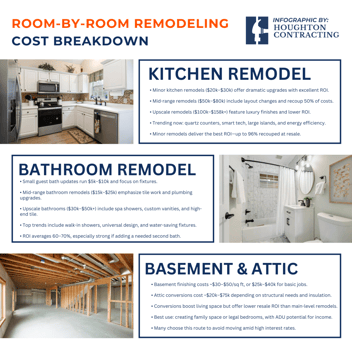
Cost of Remodeling: Remodeling projects can be scaled to your budget, from a few thousand dollars for minor updates to six figures for major overhauls. It's important to realistically estimate your project costs. National averages can provide a rough idea, for instance, a moderate kitchen remodel might average around $25,000, while adding an addition could cost tens of thousands more. Home improvement surveys show wide ranges: the average cost of a whole-home remodel can run around $46,000, but projects vary from small $5,000 updates up to $150,000+ for extensive renovations. The key is that remodeling costs are highly variable based on the scope of work, materials, labor rates in your area, and surprises that arise
Cost of Buying a New Home: Moving to a new home has its own set of costs, which are often substantial and sometimes underestimated by homeowners. When you buy a new home, you'll likely be selling your current one (unless you plan to keep it as rental or otherwise). So you have costs on both sides: selling costs for your old home and purchase costs for the new home, plus the physical moving expenses.
(Renovate or Move: Our Flowchart Will Help You Decide | The Zebra) "Should you renovate or relocate?", A flowchart and infographic weighing the pros, cons, and common reasons people choose to remodel or move. It highlights that moving comes with stresses and costs (selling, moving) whereas renovating requires living through construction. Use such decision tools to reflect on your priorities.
Key Factors to Consider Before Making a Decision
1. Real Estate Market Conditions: The housing market can strongly influence your decision. Ask yourself "Is now a good time to sell, or a good time to invest in my home?" Market conditions include home prices, buyer demand, and interest rates. For example:
- If home prices in your area are very high and it's a seller's market, selling your home could fetch a great price (more profit for you). However, you'll also have to buy in that same high-priced market unless you're moving to a cheaper area. In a hot market, the new home might cost you a premium, and competition could make finding a suitable house difficult. Some homeowners in this situation choose to remodel instead, they enjoy the benefit of a high-value market by improving their existing home's value, without having to jump into a frenzied buying market.
2. Your Long-Term Needs and Lifestyle: Think about what you truly need and whether a remodel can fulfill that, or if a new home is the only answer. Some considerations:
- Space and Layout: Do you need more space, or a different layout? If your family is growing and you need an extra bedroom, can you add one by finishing the basement or building an addition? If yes, a remodel might solve the problem. But if your lot is too small to expand or the cost of adding a second story is prohibitive, moving to a larger home might be more practical.
- Location, Location, Location: This old adage holds true, you can change a house, but not its location. Consider how much you value your current location. Are you in a great school district, a short walk to friends, or close to work? These intangible benefits of location might outweigh the allure of a new house. If the only issue is that the house itself isn't ideal, remodeling allows you to keep the location you love.
- Emotional Attachment: Homes carry sentimental value. Perhaps it's the house your children grew up in, filled with memories. Such attachment can make moving emotionally hard. Remodeling allows you to preserve those memories while updating the home for the future. However, sometimes people feel equally sentimental about renovations, it can be hard to live through the disruption or see parts of the old home changed. Weigh these feelings
3. Financial Impact and Return on Investment (ROI): Consider the financial outcome down the road. If you remodel, what will it do to your home's value? If you move, are you buying something that is a better investment or just a more comfortable fit?
- Many remodeling projects do not pay for themselves fully in increased value. For example, if you spend $50,000 finishing a basement, your home's value might increase by $30,000, it varies. Few projects recoup 100%+ of their cost in resale value. According to remodeling cost-vs-value reports, some projects have higher ROI (like replacing an old garage door or minor kitchen remodel might recoup a large percentage), while expensive additions or high-end custom work often recoup less.
Smart Financing Strategies for Your Home Remodel
Best Financing Options for Home Renovations
- Paying with Cash/Savings: This is the simplest method, using your savings or checking account to directly pay contractors and purchase materials. Pros: No debt incurred, no interest to pay, and you keep your home free of liens. Paying in cash can sometimes get you discounts from contractors since they don't have to deal with loan paperwork or credit card fees.
- Home Equity Line of Credit (HELOC): As discussed in Section 1, a HELOC lets you borrow against your home's equity up to an approved limit and is very flexible. Pros: You can draw money as needed, which is great for ongoing or uncertain costs. Interest rates are relatively low compared to unsecured loans because your home secures the credit. During the draw period, many HELOCs are interest-only, minimizing payments while you're remodeling (you can often choose to pay extra towards principal).
- Home Equity Loan (Second Mortgage): A lump-sum loan against your equity, usually at a fixed interest rate. Pros: Fixed rate and fixed payments provide certainty, you know exactly what your monthly payment is and for how long. This can be easier to budget for than a variable HELOC. It's useful when you have a pretty firm idea of what the project will cost and you need all the money upfront (for example, paying a contractor for an addition). Interest rates are typically lower than personal loans and credit cards, and interest may be tax-deductible if used for the home
- Cash-Out Refinance: Refinance your existing mortgage into a larger one and take the difference in cash. Pros: You maintain a single mortgage payment. If current interest rates are favorable (lower than your old rate), you might even reduce your rate on your entire debt while borrowing extra cash, a double win. Even if the rate is slightly higher, sometimes the convenience of one loan is preferable. Cash-out refinances can have fixed or adjustable rates, similar to regular mortgages
- Personal Home Improvement Loan: These are unsecured loans (no collateral) you can get from a bank, credit union, or online lender. Essentially, they're personal loans marketed for home improvement. Pros: Quick and relatively easy to obtain if you have decent credit, often less paperwork than home equity loans (no appraisal needed since no collateral). You receive a lump sum and repay in fixed installments, typically over 3–7 years. No risk to your home if you default (though your credit will suffer).
Choosing the Best Option: The best financing choice depends on your financial situation, the project size, and your risk tolerance. Here are a few scenarios as examples:
- If you have significant equity and want a long-term fixed payment, a home equity loan or cash-out refinance might be best. You lock in today's rate and know your payment. Use this for large single-stage renovations (e.g., a major addition).
- If you need flexibility or are tackling a long project where costs might evolve, a HELOC could be better. You can borrow in chunks and even reuse the line for future projects (like maybe kitchen now, bathrooms next year). Just be disciplined with a HELOC to pay down what you borrow.
- If you have little equity but good credit, an unsecured home improvement loan can finance a moderate project (say $10k–$30k) without tying up your home. Just ensure you're comfortable with the higher interest rate and payment.
- If the project is small and you can pay quickly, a credit card promo or just using savings might be simplest. For example, you need $5k for new flooring, putting it on a 0% credit card for 12 months and paying $416 a month to clear it can work, saving you loan setup hassles (but do pay it off in 12 months!).
- If you're buying a house that needs work, an FHA 203(k) loan can be a lifesaver, letting you roll everything into your mortgage. Or, if you're a veteran, a VA renovation loan or simply a VA cash-out refinance could fund improvements.
Tips for Keeping Remodeling Costs Under Control
1. Plan Meticulously and Define the Scope: Before you start, plan out exactly what you want done. Changes mid-project ("scope creep") are a major cause of cost overruns. Work with a designer or architect if needed to get a detailed plan. The more clearly you can specify materials, finishes, and labor tasks up front, the more accurate your contractor estimates will be.
2. Get Multiple Quotes from Contractors: Don't go with the first contractor you talk to. It's recommended to get at least 2–3 estimates for the work. Provide each contractor with the same project scope so you can compare apples to apples. Different contractors might suggest different approaches, which can be informative, but for pricing, ensure they're bidding on the same basis. Be wary of any bid that is dramatically lower than others; it could be a sign they underestimating or will cut corners (or hit you with change orders later).
3. Build a Contingency Budget: As mentioned, plan for the unexpected. A common rule of thumb is adding at least 10% contingency for new construction and 10–20% for remodeling of older homes (since older houses hide more surprises). Some experts even say 20% across the board for remodels. If you don't end up needing it, great, you have money left over. But if you do, you won't have to scramble or cut corners.
4. Avoid Over-Improving / Keep Resale in Mind: If keeping on budget is crucial, focus on improvements that add value or at least are in line with other homes in your area. It's easy to get carried away with high-end luxuries, custom imported tiles, top-of-the-line appliances, etc. These can explode your budget. You can often find budget-friendly alternatives that achieve a similar look or function.
5. Consider DIY (Selectively): Sweat equity can save money, but be honest about your skills. Doing some tasks yourself, painting, simple demo, landscaping, etc., could save on labor costs. If you are handy and knowledgeable, you might take on parts of the project. However, don't DIY technical work (like electrical, plumbing beyond your ability, or structural changes) just to save money; mistakes can lead to code violations or expensive fixes later.
Conclusion
Deciding whether to remodel your current home or purchase a new one is a multifaceted choice involving financial calculations, market considerations, and personal priorities. There is no one-size-fits-all answer, the "right" decision hinges on what makes the most sense for your budget, your family, and your future plans.
FAQs (Frequently Asked Questions)
Q: How can I use my home equity to finance a remodeling project?
You can tap into home equity through a home equity loan, home equity line of credit (HELOC), or cash-out refinance. A home equity loan gives you a lump sum at a fixed interest rate, repaid in equal installments. A HELOC lets you draw funds as needed up to a limit, and you pay interest only on what you borrow (often with a variable rate). A cash-out refinance replaces your existing mortgage with a larger one and gives you the difference in cash.
Q: Is it cheaper to remodel or to buy a new home?
It depends on your situation and the scope of what you need. Generally, remodeling can be cheaper if you only need to address a few specific issues in your current home, especially when you factor in the "hidden" costs of moving (realtor commissions, closing costs, moving expenses). With a remodel, the money you spend is going into tangible improvements (and you avoid moving expenses). However, remodeling carries risk of cost overruns. Moving gives cost certainty in the sense that you know the purchase price (though you could face repairs in the new home too).
Q: What financing options are best for a small project (under $10,000)?
For a relatively small remodel or repair (a few thousand dollars), the top choices are usually cash/savings, a credit card, or a small personal loan. If you have the savings, paying cash is simplest and avoids debt. If not, a 0% APR credit card offer can work well, many cards offer 0% interest on purchases for 12–18 months. If you charge the project costs and can pay it off within the promo period, you pay no interest (just be disciplined about repayment before the high rate kicks in)
Q: Will remodeling my home increase its value? By how much?
Certain remodels and improvements can increase your home's market value, but rarely will you get a dollar-for-dollar boost equal to what you spend. The value increase depends on the type of project, the quality of work, and your local market. For example, projects that add usable space or upgrade core functions of the home often have good returns, adding a bathroom, renovating an outdated kitchen, or improving curb appeal (like a new front door or garage door) tend to recoup a large percentage of their cost in increased value. According to Remodeling Magazine's Cost vs. Value report, many of these projects return anywhere from ~50% to 80%+ of their cost as added value at resale (it varies by year and region). Some simpler projects can even return close to 100% (for instance, garage door replacements have been known to recoup almost their entire cost because they greatly improve curb appeal relatively cheaply).