.png?width=150&height=81&name=Houghton%20Contracting%20Logotype%20New%20Logo%20(1).png)
15 Min Read
Timing is everything when it comes to home remodeling. Choosing when and how often to renovate can impact your project's cost, efficiency, and return on investment (ROI). For example, remodeling at the right time of year might save you money, and updating key features at the right intervals can maximize your home's value and comfort. Homeowners commonly ask questions like, "How often should I remodel?" or "Is there a best time of year to renovate?", and these are exactly the issues we'll address in this guide.
Figure: Share of U.S. owner-occupied homes by year built. Over one-third were built before 1970 (over 50 years old), reflecting an aging housing stock that often needs updates. Many American homes are decades old, so knowing when to remodel is crucial to replace aging components and introduce modern efficiencies. Renovating too soon or at the wrong time can mean unnecessary expense, while waiting too long can lead to wear, inefficiency, or lost resale value.
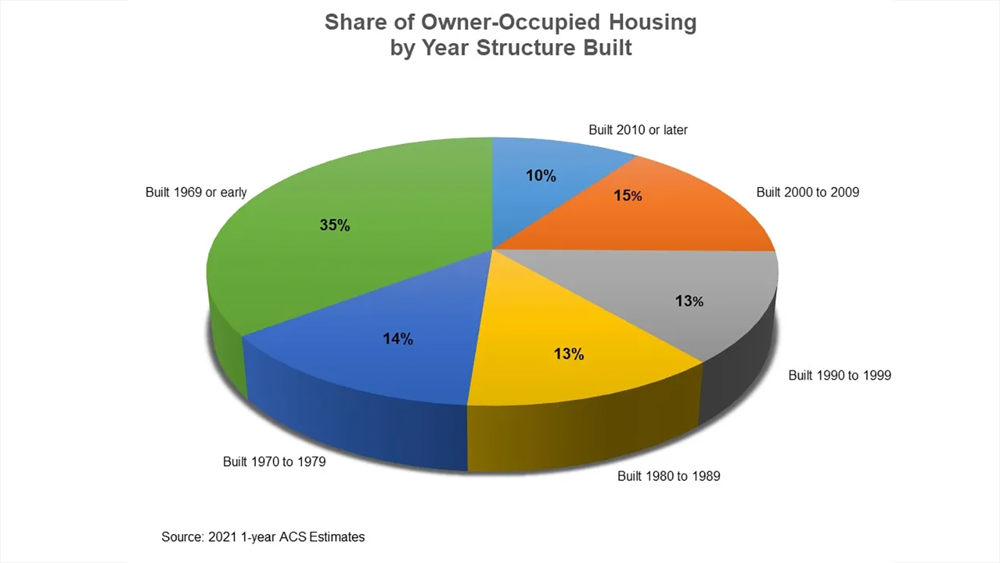
Table of Contents
- Key Takeaways
- When Should You Remodel Your Home?
- How to Plan a Remodel Without Wasting Money
- Strategic Planning for a Smooth Remodel
- Best Practices for Planning a Home Remodel
- Common Pitfalls to Avoid
- Timing Your Remodel for Maximum ROI
- Conclusion & Call to Action
- FAQs
Key Takeaways
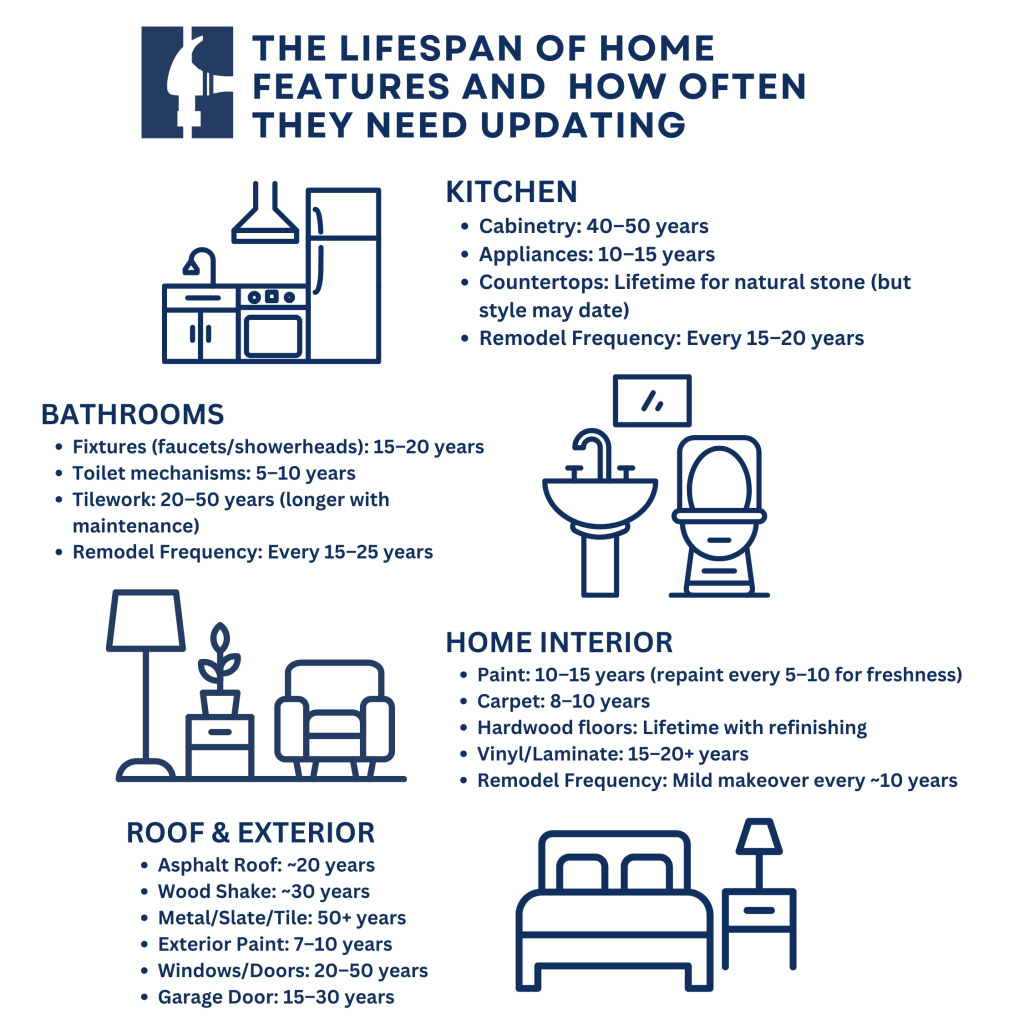
- Watch for signs of aging or inefficiency: Outdated design, visible wear-and-tear, or high energy bills can signal it's time to remodel. Key home components have typical lifespans e.g. 15–20 years for HVAC systems and 20 years for an asphalt roof, after which upgrades are often needed.
- Best season to renovate: The off-season (fall and winter) can often save you money. Contractors are less busy and may offer better pricing in cooler months, whereas spring and summer are peak (busy) remodeling seasons. Plan indoor projects for winter and weather-dependent projects for mild seasons to balance efficiency and cost.
- Don't remodel too frequently: Full room remodels are typically done only every couple of decades unless needed. For example, kitchens and baths often see major updates about every 10–20 years as styles and technology change. Focus on timeless designs to avoid your spaces looking dated too quickly.
- Plan for a smooth remodel: Careful planning prevents wasted money. Set a realistic budget (with a ~10–15% contingency for surprises, get multiple contractor bids, and schedule work (and permits) well in advance. Avoid common mistakes like mid-project changes and not getting permits, which can cause costly delays.
- Remodel for both lifestyle and ROI: Updates can greatly improve your daily life and home value, but not every project pays for itself. Many remodels recoup around 60–80% of their cost at resale. Prioritize critical repairs and broadly appealing improvements (energy efficiency, curb appeal) for the best return. Remodeling shortly before selling can boost your sale price, especially in a competitive market, but plan it so you get to enjoy the upgrades too!
When Should You Remodel Your Home?
Choosing when to remodel can be just as important as deciding what to remodel. This section covers two angles: recognizing the signs that your home is due for a remodel (based on condition and age), and picking the time of year that offers the best advantages for renovation work.
Signs It's Time to Remodel Your Home
Not sure if your home is due for an update? Here are some key indicators that a remodel (large or small) may be on the horizon:
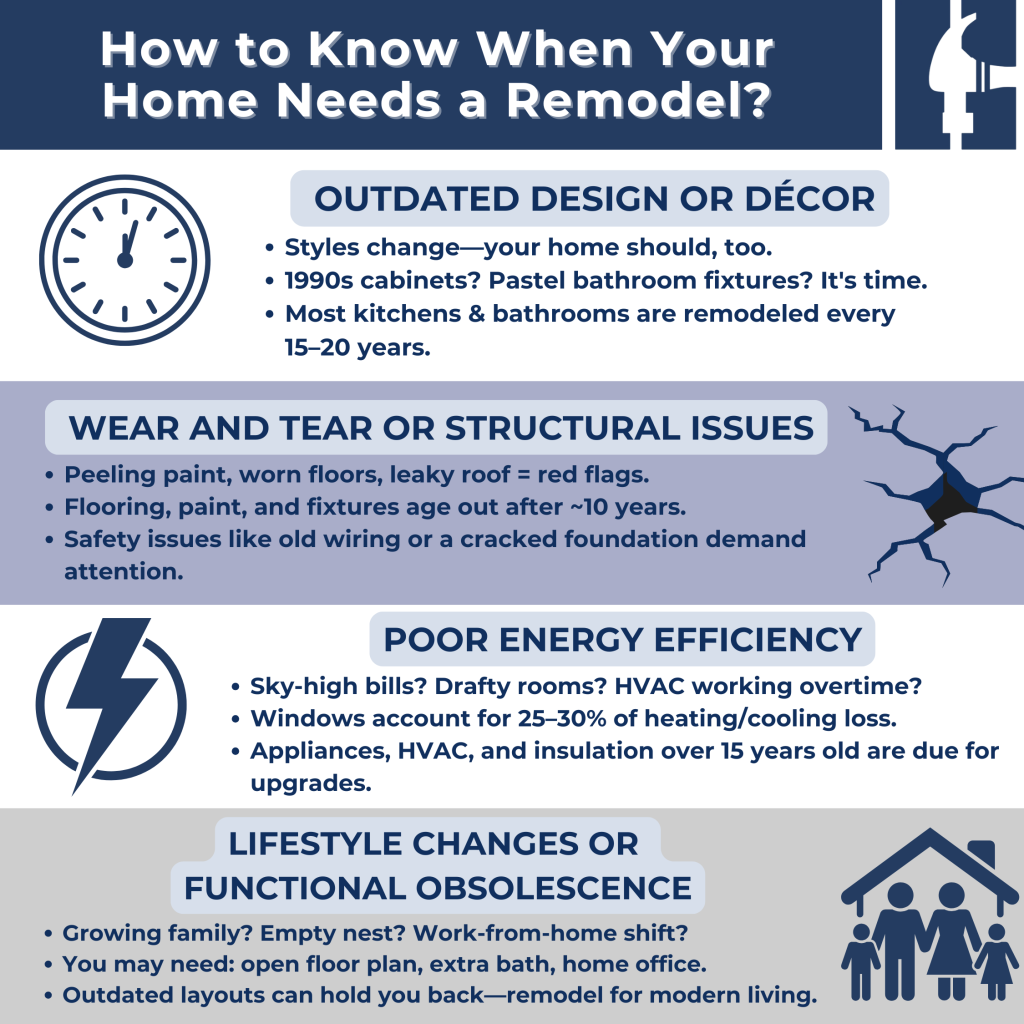
- Outdated Design or Décor: Styles change over time, what was trendy 20 years ago might make your home look dated today. If your kitchen has 1990s cabinets or your bathroom still sports pastel fixtures from decades past, it may be time for a refresh. In fact, many homeowners choose to remodel simply because it's "time for a change" in style. Kitchens and baths are common targets; industry research shows homeowners often replace appliances and finishes long before they wear out, due to changing tastes and technology.
Room-by-room: A kitchen remodel is often considered every 15–20 years to update finishes and appliances, while a bathroom might be refreshed every 15 years or so if fixtures and tile start to feel antiquated. - Wear and Tear or Structural Issues: Basic wear can accumulate and signal the need for renovation. Look for things like damaged surfaces, deterioration, or unsafe elements. For example, a roof approaching the end of its lifespan (typically ~20 years for asphalt shingles) could prompt a roofing replacement as part of a remodel. Worn-out flooring (frayed carpet, scratched wood), water damage or rot, and peeling paint are all red flags. If your home's components are simply past their prime, say your carpet is 10+ years old (average carpet life is 8–10 years) or original single-pane windows are drafty, a remodel can renew these elements.
Room-by-room: Pay attention to the age of major systems. Flooring, paint, and fixtures that see heavy daily use might need updating roughly every decade. Critical systems like electrical, plumbing, or a cracked foundation warrant immediate attention via renovation for safety.
- Poor Energy Efficiency: An inefficient home can be both uncomfortable and expensive to operate. If you notice skyrocketing heating/cooling bills, chilly drafts, or an HVAC that runs constantly, your home may benefit from energy-related upgrades. For instance, old windows and doors often let out conditioned air, the U.S. Department of Energy notes that heat gain/loss through windows accounts for 25–30% of residential heating and cooling use. Replacing decades-old windows with modern energy-efficient ones can save up to 13% on household energy bills.
Similarly, an aging furnace or AC past ~15 years will likely be far less efficient than today's models. Upgrading insulation, HVAC, or appliances during a remodel not only improves comfort but also reduces utility costs. Room-by-room: Kitchens and laundry areas with old appliances (fridge, washer/dryer) tend to waste electricity and water, most major appliances last about 10–15 years before efficiency and performance decline. Replacing these in a timely remodel can cut energy costs.
- Lifestyle Changes or Functional Obsolescence: Your home should fit your current needs. If your family has grown (or kids have moved out), or you now work from home and need an office, the layout or functionality of your space might need remodeling. Perhaps you find your closed-off kitchen doesn't allow family interaction, prompting an open-concept renovation, or you need an extra bathroom to reduce morning fights.
These lifestyle-driven changes often spur remodels even if the house is in decent shape otherwise. There's also functional obsolescence, features once considered acceptable might now be below modern standards (like a lack of storage, or only one bathroom in a three-bedroom house). If your home is lacking in modern convenience, a remodel can add new features (an extra bathroom, a finished basement, universal design for aging-in-place, etc.) to improve livability.
How to Plan a Remodel Without Wasting Money
Home renovations are a significant investment, and no homeowner wants to redo a project sooner than necessary or spend more than they have to. This section focuses on getting the most value and longevity out of your remodel. In other words, how do you plan wisely so you're not throwing money away?
1. Prioritize Needs vs. Wants
Focus on what has to be done, like fixing leaks or upgrading unsafe wiring, before cosmetic updates. This keeps your budget aligned with essential improvements. Save lower-priority wishlist items for later to avoid overspending or letting the project spiral out of control.
2. Set a Realistic Budget (with a Contingency)
Do your research and set a budget you can afford, then add a 10–15% buffer for unexpected costs. Most remodels run over due to surprises like hidden damage. Get multiple contractor bids to ensure pricing is fair and grounded in real market rates.
3. Choose Durable, Mid-Range Materials
Don't cheap out on things that get daily use, like cabinets, fixtures, or flooring, but you also don't need top-of-the-line everything. Invest in solid, long-lasting materials where it matters and go mid-range or energy-efficient where it makes sense.
4. Avoid Over-Customizing
Too much personalization (or over-improving for your neighborhood) can hurt resale value. Keep structural updates functional and timeless. Use paint and decor for personal flair, it's cheaper and easier to change later.
Source: Empower
5. Maintain What You Upgrade
Routine upkeep helps your remodel last. Seal decks, service HVAC systems, and fix small issues early. A little maintenance goes a long way, and saves you from repeating big renovations too soon.
Strategic Planning for a Smooth Remodel
A successful home remodel isn't just about picking the right materials or colors, it requires solid planning and project management. In this section, we shift from what to do to how to do it. We'll outline best practices for planning and executing a remodel with minimal stress and delays, and then discuss timing your remodel strategically for the best financial return (especially if you might sell your home down the line). With the right planning, you can save time, money, and lots of headaches.
Best Practices for Planning a Home Remodel
Tackling a renovation can feel overwhelming, but breaking it down into clear steps can keep you organized. Below is a step-by-step guide to planning a smooth remodel:
Step 1: Define the Scope and Goals of Your Project
Start by clearly identifying what you want to remodel and why. Are you remodeling a kitchen for better functionality and updated style? Finishing a basement for more living space? Make a "needs and wants" list for the project. This will guide all your decisions. Decide early which spaces are involved and what level of finish you expect (cosmetic refresh vs. gut renovation). Having a defined scope helps with getting accurate estimates and prevents the project from ballooning mid-way.
Step 2: Set a Budget and Secure Financing
Determine how much you are able and willing to spend on the remodel. Research ballpark costs: you can use resources like Remodeling Magazine's Cost vs. Value Report to see average prices for similar projects in the U.S., or get preliminary quotes. Be honest about your budget with any professionals you involve, it helps them tailor the scope to what's affordable. If you need financing (home equity loan, renovation loan, etc.), start that process early so funds are available when needed. Remember to include a contingency (around 10-15% of the budget) for unplanned expenses.
For example, if you budget $50k for a major remodel, set aside an extra ~$5-7k just in case. It's easier to downgrade some finishes later if bids come in high than to scramble for more money mid-project. Prioritize line items in your budget (cabinets, flooring, etc.) to see where you could cut if needed. This step is also a good time to research any financial incentives or credits, for instance, federal tax credits for energy-efficient improvements or local rebates for certain upgrades. These can effectively increase your budget or pay you back later.
Step 3: Assemble Your Team (Architect/Designer and Contractor)
Depending on the size of the remodel, you may need an architect or designer to draw plans and a general contractor (GC) to execute the work (or a design-build firm that handles both). Take time to hire reputable, licensed professionals. Ask for recommendations from friends/neighbors who had good experiences . Check contractor credentials: ensure they are licensed, insured, and check if any complaints are on file with consumer protection or the Better Business Bureau.
Get multiple estimates, at least 2 or 3, for the project scope. This not only gives you price comparisons but also a sense of each contractor's communication and thoroughness. When reviewing bids, make sure they include similar details (materials, timeline) so you're comparing apples to apples. Don't automatically take the lowest bid; weigh the contractor's reputation and the completeness of their bid. It's often worth paying a bit more for someone experienced and reliable. Request references and actually call them, ask past clients if the contractor stayed on budget and schedule, and how they handled any issues. A little legwork here can save huge hassles later. Also, develop a rough timeline with the contractor: discuss when they could start and how long they estimate different phases will take. If you need the project done by a certain date (say, before a new baby arrives or before the holidays), communicate that clearly and see if it's feasible.
Step 4: Plan the Details Before Construction Starts
The planning phase is the time to make key design decisions and selections, before hammers start swinging. Work with your designer or contractor to finalize the layout, choose materials (tile, flooring, fixtures, paint colors, appliances, etc.), and get all your ducks in a row. Changes and indecision are a major cause of delays and cost overruns. Each time you change your mind on a big item after work has begun, it could mean reordering materials or redoing work, which wastes time and money.
So, try to freeze the design as much as possible up front. Have your contractor walk you through the plan: know where every outlet will go, how the trim will look, etc., so there are no misunderstandings. Obtain necessary permits before work starts, your contractor often handles this, but as the homeowner you should verify permits are secured (unpermitted work can lead to fines or trouble selling the home later. Ensure you have a written contract that spells out the scope of work, payment schedule, approximate timeline, and how changes will be handled. Never rely on verbal promises alone. A solid contract protects both you and the contractor by setting expectations clearly. It's also a good idea to discuss with your contractor how you'll communicate (e.g. weekly meetings or updates). If you're living in the house during the remodel, set ground rules (work hours, which bathroom they can use, etc.) to avoid friction.
Step 5: Prepare for the Disruption
If you're renovating a space you currently use (like your only kitchen or bedroom), plan how you'll manage while it's out of commission. Set up a temporary kitchen with a microwave and mini-fridge if needed, or arrange to stay with family for a week when the bathroom is being retiled. Empty out rooms and protect belongings from dust, most contractors will put up plastic barriers and use drop cloths, but you should remove or cover anything valuable or sensitive. If the remodel is extensive, consider renting a storage pod for furniture to clear space.
Step 6: Monitor the Project and Stay Flexible
Once construction begins, stay engaged with the process. Check in regularly on progress, you don't have to hover over the crew, but being available for questions or decisions is important. Sometimes unexpected issues arise (like discovering old plumbing that needs replacement); you'll want to discuss solutions and understand cost impacts. Keeping communication open with your contractor can prevent small issues from snowballing. Track expenses against the budget. If something is coming in higher, perhaps you can cut or defer another item to stay on track.
Step 7: Close Out and Enjoy
When the remodel is essentially done, walk through the space with your contractor and list any little touch-ups or fixes (the "punch list"). Reputable pros will address these promptly. Make sure you receive any necessary documentation: copies of permits/inspections, receipts or warranties for appliances and products installed, and a lien waiver from the contractor indicating subcontractors have been paid (so you don't get surprise liens). Keep these with your house records.
Common Pitfalls to Avoid
Even with good planning, there are some classic mistakes that trip up renovations.
Try to avoid:
(a) Starting without a cushion of funds, being cash-strapped mid-project is very stressful;
(b) Changing your mind repeatedly, it incurs extra costs and frustrates the work crew;
(c) Not planning for permits or inspections, work might get halted if you skip this, and unpermitted work can cause legal issues
(d) Paying too much up front, a legitimate contractor will structure payments as work progresses, not take 100% in advance and
(e) Assuming everything will go perfectly on schedule, build in a time buffer in case of delays, especially for big projects. Also, don't forget about lead times, custom cabinets might take 8-10 weeks to arrive, for instance. Order materials early so you're not waiting on them with workers idle.
Timing Your Remodel for Maximum ROI
For many homeowners, a remodel isn't just about enjoying a nicer home, it's also an investment. This is especially true if you plan to sell your house in the not-so-distant future. In this section, we'll discuss how to time and tailor your renovations to get the best return on investment (ROI). Essentially, how do you maximize the financial payoff of a remodel when you eventually sell?
- Consider Remodeling Before Selling (Strategically): It's often said that move-in-ready homes sell faster and for a higher price. Buyers generally prefer homes that don't require immediate work, so doing key updates before listing can be very worthwhile. According to a 2022 report by the National Association of REALTORS®, a significant share of homeowners undertake projects specifically with selling in mind, one survey found 23% of home improvement projects were motivated by plans to sell within two years. The right improvements can boost your home's market value and appeal.
- Focus on High-ROI Projects: Not all renovations pay back equally. When ROI is your goal, concentrate on improvements that add tangible value. Broadly, projects that improve the home's basic systems or boost curb appeal tend to recoup more value than luxury add-ons or highly personal touches. For instance, replacing an old, leaky roof or updating an ancient HVAC system can be very attractive to buyers (and often necessary to pass inspections). Exterior upgrades like a new garage door, modern siding, or a new entry door have been shown to offer some of the highest ROI, often recovering a large percentage of their cost at resale. This is because they improve the home's appearance and condition from the outside, the all-important first impression.
In fact, decades of data from the Remodeling Cost vs. Value report confirm that minor projects and exterior replacements (like siding, doors, windows) consistently yield higher returns than major interior remodels . As an example, a recent Cost vs. Value analysis found a minor kitchen remodel (a modest facelift, not a full gut job) could return about 86% of its cost on average at resale, whereas a major upscale kitchen remodel might return only ~50-60% . Similarly, a mid-range bathroom remodel might recoup around 70%+ of costs. The lesson: you don't have to go overboard to impress buyers, often, it's the simple, quality updates (new countertops, refaced cabinets, modern fixtures) that give a great ROI because they make the home look up-to-date without overspending.
- Avoid Over-Improving Relative to the Market: One way to lose ROI is to improve far beyond what's typical in your neighborhood. Real estate values are tied to location and comparable. If you install a $100,000 chef's kitchen in a neighborhood of $300,000 homes, you're unlikely to get that money back in the sale, the house may sell for somewhat more, but not enough to cover the full cost, because buyers won't pay a $400,000 price for a $300,000 area. Pay attention to your local market. A good Realtor or appraiser can tell you what upgrades are expected at various price points. The sweet spot is to make your home one of the nicer ones in its segment, but not an outlier. That often means choosing quality finishes that align with current buyer tastes for your home type.
- Mind the Market Timing: Timing your remodel with respect to housing market conditions can also affect ROI. In a seller's market (high demand, low supply of homes), even modest improvements can yield strong returns because buyers are competing for limited listings.
In a buyer's market (excess inventory, fewer buyers), a beautifully remodeled home will stand out and is more likely to attract a buyer at a good price, whereas an unimproved home might languish or require price cuts. Currently, factors like mortgage interest rates and housing supply can sway the renovate vs. sell equation. For instance, with higher interest rates making moving more costly, many owners are choosing to renovate and "stay put." This can actually be an argument for remodeling: if fewer people are selling, a nicely upgraded home on the market could fetch a premium from those buyers who are out there.
Also, if you expect home values in your area to rise over the next few years (say there's new infrastructure or development making the location more desirable), investing in a remodel now can mean you sell into a pricier market later, amplifying your ROI. On the flip side, if the market is at a peak and possibly cooling, be cautious about pouring in money that you might not get back if values dip. Essentially, keep an eye on economic indicators and local trends. Rising home prices often encourage more remodeling partly because people feel confident they'll get it back, and indeed the increased equity can absorb the cost. If your home's value has jumped, using some of that equity for strategic improvements can further boost its value or at least maintain competitiveness.
- Get Advice on What Buyers Want: If you're remodeling specifically with selling in mind, consult a knowledgeable real estate agent about which upgrades are worth it. They often know what features are hot in your market. For example, an agent might say "homes with an open-concept kitchen/dining are selling for 5% more in this area" or "finish the basement bedroom to count as extra square footage, it will increase appraised value." They may also advise on paint colors and finishes that have broad appeal (neutral tones, etc.).
According to NAR surveys, the projects most recommended by Realtors to sellers include simple improvements like paint, flooring, and lighting updates, as well as minor kitchen/bath upgrades. Many Realtors also suggest focusing on any deferred maintenance, if your roof or HVAC is old, replacing it can reassure buyers and possibly improve appraisal value. In fact, some replacements can make your money back entirely; one study noted that a new HVAC system or converting to a more efficient system could yield an ROI of 100% or more (not to mention likely helping the home sell faster). They're not glamorous changes, but buyers love seeing new mechanicals because it's one less thing to worry about.
- Enjoyment vs. Resale, Find a Balance: Lastly, if you're not selling immediately, remember that ROI isn't everything. There's also the concept of the "joy score" or the happiness return from a remodel. The NAR's Remodeling Impact Report actually assigns "Joy Scores" to projects based on homeowner satisfaction, many interior remodels score a perfect 10 for happiness, even if the dollars-out vs. dollars-in isn't 100%. So think about how long you plan to live in the house.
If it's at least a few years, it's worth doing renovations you will personally enjoy, not just what you think a future buyer will like. You get to live in the home in the meantime, after all. For example, if you love cooking, splurging on a slightly nicer range might be worth it for you, even if a buyer wouldn't pay extra for it specifically. Just avoid anything so unique it could hurt resale (as discussed). One strategy: keep the bones and layout buyer-friendly, but you can always style the space to your taste with decor. When it's time to sell, staging can neutralize some of your personal touches.
Conclusion & Call to Action
Remember, your home is likely your largest investment, taking care of it through smart renovations is part of growing that investment. Plus, you deserve to live in a space that is safe, efficient, and beautifully suited to your taste!
If you're feeling unsure about where to begin or what your home might need, we're here to help. Not sure if it's time to remodel? Get a free home renovation consultation today! Our team of experts can evaluate your home's condition, discuss your goals, and help you map out a remodeling plan that makes sense for your situation. Whether it's next season or next year, we'll ensure you pick the best time and approach for your project.
Your dream home (or your top-dollar sale) might just be a well-timed remodel away. Happy renovating!
FAQs
1. How often should a kitchen or bathroom be remodeled?
On average, every 15–20 years. Kitchens may show wear or go out of style after two decades, and bathrooms follow a similar timeline. Heavy use or lower-quality builds may need updates sooner.
2. Is it cheaper to remodel in the winter?
Often, yes. Winter is a slower season for contractors, so you might get lower prices or faster scheduling, especially for indoor work.
3. What renovations give the best return on investment (ROI)?
Small, high-impact projects like new garage or entry doors, minor kitchen updates, and new siding or windows tend to have the best ROI. Costly luxury remodels usually return less.
4. Do I really need permits for my remodel?
If you're doing electrical, plumbing, or structural work, yes. Cosmetic updates like painting usually don't. Always check with your local building department to be sure.
5. Should I remodel or move?
It depends. Remodeling can be cheaper and less disruptive if you love your home's location and layout. But if your home can't meet your needs even with changes, moving might make more sense.